The Most Isolated Man on Earth: What's Really in Antarctica | Ep 2


 iHeartRadio
  Amazon Music
  Castbox
  PocketCasts
  Overcast
 Key Takeaways
- Akshay Nanavati demonstrates that mental suffering is often a byproduct of our own resistance or clinging to specific outcomes.
- By reframing pain as a chosen experience, individuals can shift their perspective from being a victim of their circumstances to an active participant in their growth.
- Extreme isolation and physical endurance, such as pulling a 420-pound sled across Antarctica, reveal the massive, often untapped ceiling of human potential.
- The experiences shared by Nanavati, including his time in Iraq and his record-breaking expedition, prove that labels we place on ourselves—like veteran or survivor—can easily become prisons if not consciously managed.
- True mastery over one's mental state involves finding meaning in the 'work' itself rather than focusing solely on the end result or summit.
Everything in your head is a story, you might as well make up whatever you want. Akshay Nanavati is a Marine Corps combat veteran who cleared bombs on foot in Iraq, spent 60 days completely alone dragging the heaviest sled ever pulled across Antarctica, and sat down with a Tendai Buddhist marathon monk who runs up to two marathons a day for a thousand days and when asked if he suffered said simply, why would I, I chose to be there.
In this episode of Forged, Akshay breaks down why all mental suffering comes down to resisting or clinging, how the frame through which you experience pain is something you built and can rebuild, and what nine days of no food no water and no sleep teaches about the upper ceiling of human possibility. If you have ever felt like your own mind is the hardest thing you have ever had to survive, this one is for you.
Chapters:
(00:00) Introduction
(03:56) The Power of Reading
(13:51) The Gas Chamber and the Crucible
(17:35) Being a Mortar Man and Walking for Bombs
(21:10) The Experience in Iraq
(30:57) Losing Friends to War
(41:21) Only Worrying About the Mission
(48:45) Labels Become Prisons
(54:52) The Marathon Monk Changes Everything
(01:04:51) Why Antarctica and the First Expedition
(01:13:35) The Crossing: 420 Pounds, 60 Days, Alone
(01:24:08) The Apex Moment Is Not the Summit
(01:38:19) Choose Your Suffering
(01:46:54) The New Book: The Work Is the Win
The best conversations start with the best guests. Drop a comment below and tell me who you want to see on Forged!
Subscribe now and get ready to be the most interesting person in the room.
If you want to work with the team behind my show, book a call: https://calendly.com/brady-edwards/discovery
Connect on Social Media
Instagram: https://www.instagram.com/forgedpod
TikTok: https://www.tiktok.com/@forgedpod
Facebook: https://www.facebook.com/profile.php?id=61589690551787
Connect with Akshay:
Website: https://fearvana.com/
YouTube: https://www.youtube.com/c/fearvana
Instagram: https://www.instagram.com/fearvana
X: https://twitter.com/fearvanalife
LinkedIn: https://www.linkedin.com/in/fearvana/
Frequently Asked Questions
Who is Akshay Nanavati?
Akshay Nanavati is a Marine Corps combat veteran who served in Iraq and an extreme adventurer known for pulling a 420-pound sled alone across Antarctica.
What did Akshay Nanavati learn from his 60-day Antarctica expedition?
The expedition taught him that human potential is far higher than we perceive and that the ability to choose how we suffer is a fundamental key to overcoming mental blocks.
How can you overcome mental suffering according to Akshay Nanavati?
Nanavati suggests that mental suffering is largely caused by resistance, and by consciously choosing to embrace the challenges before you, you can transform the experience from painful to purposeful.
What is the primary philosophy behind Akshay Nanavati’s work?
His philosophy centers on the idea that the 'work is the win,' emphasizing that finding fulfillment in the process rather than the destination is essential for human resilience.
00:00:00:04 - 00:00:02:22
TRAILER
Akshay, you went to Antarctica. Did you see the ice wall?
00:00:02:22 - 00:00:15:02
TRAILER
I ended up spending 60 days completely alone, dragging the heaviest sled anyone's ever pulled from that coast of Antarctica through 500 miles of uphill, soft snow terrain, in what one adventure is called the boldest Antarctic expedition in modern history.
00:00:15:03 - 00:00:20:16
TRAILER
So your job at a certain point in Iraq was to walk ahead of the vehicles in search for bombs.
00:00:20:16 - 00:00:33:14
TRAILER
To Marines. Me and one of them would walk up, clear the bridge. So make sure there's no wires, make sure there's no bombs. So it was like a running joke that not a body's going to get blown up. Today. When I was in Iraq, my vehicle drove over an active bomb that for some reason did not explode. And I told you about my friends who drove a bomb.
00:00:33:14 - 00:00:34:14
TRAILER
It exploded. He died.
00:00:34:15 - 00:00:36:10
TRAILER
Losing someone like that has to change you.
00:00:36:11 - 00:00:54:00
TRAILER
The single most valuable skill to master in the human experience is to start recognizing how the entire frame you have of reality is constructed. Everything in your head is a story, and if it's all a made up story, just make up whatever the you want.
00:00:54:02 - 00:00:56:22
Brady
Oxygen. You are a psycho.
00:00:57:02 - 00:01:01:04
Akshay
You are the most.
00:01:01:06 - 00:01:02:01
Brady
everybody
00:01:02:05 - 00:01:14:09
Brady
once in their life gets so excited to meet someone that is just a true psycho. And they're like, they'll go their whole lives and they'll. They'll think about that one person and they're like, I've just never met anyone like that. I've met a few people like that. Like I count them as friends, like I've got some pretty.
00:01:14:10 - 00:01:32:21
Brady
I was like, okay, Mr. Beast is a psycho. Like, he just he works like, you can't believe he's got the best ideas. I met you, and I was like, who is this guy who thinks that they're going to ski across Antarctica pulling a 420 pounds sled just to prove it? I mean, I don't. Have you always been this way?
00:01:32:23 - 00:01:50:14
Akshay
I have not, I used to be scared of everything when I was a kid. Scared of even Ferris wheels here. Of roller coasters, open water. I still remember I traveled with my family to Australia, the Great Barrier Reef, and we were snorkeling and I was snorkeling out to suddenly where the the reef. You couldn't see it anymore. It dropped into the nothingness of the ocean.
00:01:50:14 - 00:01:59:09
Akshay
I got too scared and turned around. So that, and I mean, I literally was scared to go on a Ferris wheel. That's where I came from. Took a bit of a 180.
00:01:59:09 - 00:02:01:10
Akshay
Or a little bit, a little bit.
00:02:01:13 - 00:02:02:13
Brady
That's crazy.
00:02:02:15 - 00:02:02:21
Akshay
Yeah.
00:02:02:22 - 00:02:20:03
Brady
So I mean, this desire for you to just seek out suffering, pain, discomfort, it all started, I guess, in the Marines, you were in a really bad way in life, substance abuse, trying to figure out what gave you fulfillment because there wasn't any. And then you went, okay, well, screw it, I'll go to the Marines. Right. Is that kind of.
00:02:20:04 - 00:02:36:14
Akshay
So yeah, I had moved around a lot as a young child, moved from two cities in India to Singapore to Austin, Texas. And when I moved to Austin very soon after moving here, it got heavily into drugs, alcohol. I still have these scars on my arm and burn on my arm from cutting myself, burning myself. Very self-destructive. Lost two friends to addiction.
00:02:36:14 - 00:02:40:04
Akshay
And the thing that changed my life was watching the movie Black Hawk Down. Have you seen the movie?
00:02:40:05 - 00:02:40:17
Akshay
Oh, yeah.
00:02:40:18 - 00:02:58:13
Akshay
Yeah, that movie was the trigger that changed my life. Especially that scene where Gary Gordon and Randy sugar volunteered to go down to set up a defensive perimeter to protect Michael Durant, and they both died. They received the Medal of Honor posthumously for their courage. I mean, I was moved to tears, the kind of courage to do something like that, knowing you're putting yourself in extreme harm's way.
00:02:58:14 - 00:03:18:19
Akshay
I mean, there was thousands of enemy personnel coming their way. They knew that, and they still went down. That made me question this worthless, selfish, meaningless life I was living at the time. And almost overnight, I mean, I started I read the book Black Hawk Down that night, got the book, read it within a few days, started devouring book after book on military life in combat and that's overnight.
00:03:18:20 - 00:03:31:12
Akshay
Decided to stop doing drugs and wanted to join. Wanted to serve something that was about not just challenging myself, but serve in an institution where the good of the group matters more than your individual well-being. And there's profound beauty in that.
00:03:31:12 - 00:03:37:00
Brady
Do you think that reading as like a mechanism of learning has fundamentally changed because like, look, it's 2026?
00:03:37:01 - 00:03:37:23
Akshay
Yeah.
00:03:38:01 - 00:03:42:05
Brady
People don't really read there's books everywhere, but it's like you have a Kindle, you have like.
00:03:42:05 - 00:03:42:18
Akshay
Your phone.
00:03:42:21 - 00:03:49:18
Brady
You know, you're like, oh, I'm reading your words on it. I'm reading them. But you really open up a book and you digest and just, like, tune out the rest of the world in a book.
00:03:49:19 - 00:03:50:05
Akshay
Yeah.
00:03:50:06 - 00:03:55:09
Brady
I feel like it's kind of becoming a lost art, and I don't know why, but do you feel like that has changed, like a big part of your.
00:03:55:09 - 00:03:55:21
Akshay
Life.
00:03:55:22 - 00:04:13:04
Akshay
On like, undoubtedly, yes. Between reading books then or even more recently, I mean, reading Viktor Frankl Man's Search for meaning changed my life. I actually read that when I was in Iraq and struggling. War is somewhat stressful, I believe it or not. And Viktor Frankl, man, search for meaning. And I actually listened to it when I was in Antarctica.
00:04:13:07 - 00:04:27:14
Akshay
You know, so many books have touched my soul in such a deep way. Carl Jung's work have moved me and changed how I operate, and then ultimately moved through reality and the wisdom I can now bring to serve others. It's all connected to wiser people than myself who came before me.
00:04:27:16 - 00:04:37:20
Brady
So in that reading, in that decision to go, okay, well, the inspiration in that came from Black Hawk Down, which, by the way, it's what is crazy situation. Those were Delta Force guys.
00:04:37:21 - 00:04:38:01
Akshay
Yeah.
00:04:38:03 - 00:04:55:01
Brady
They're not they're not like lame. They're the best of the best. And to have all I mean, it was so crazy because the insurgents just suddenly all of them had guns and they're all coming out of the buildings. And what they had evaluated as the potential enemy force, it like it went exponentially larger. It was everybody in there handing out guns, and they're saying, take out the Americans.
00:04:55:07 - 00:05:13:13
Brady
That whole movie is just so astonishing then. Yeah. And so you said that in the the sacrifice of the collective, or it was the sacrifice of the individual for like a much bigger purpose, you found there to be beauty in that. Does that come at the cost of individualism? Because we we're like in a highly individualized society.
00:05:13:14 - 00:05:13:19
Akshay
Yeah.
00:05:13:19 - 00:05:23:16
Brady
It was I was shocked to see that the Navy hit the recruitment goals this year, and they hit it like two months early. Yeah, I think their goal was 44,000 recruited and they hit it and then some several months earlier.
00:05:23:17 - 00:05:24:05
Akshay
That's interesting.
00:05:24:07 - 00:05:24:21
Brady
Was really cool.
00:05:24:22 - 00:05:26:02
Akshay
So would not have thought that right.
00:05:26:02 - 00:05:27:03
Akshay
Now I wouldn't either.
00:05:27:04 - 00:05:27:16
Brady
But you know.
00:05:27:17 - 00:05:28:04
Akshay
They did it.
00:05:28:05 - 00:05:35:03
Brady
Yeah. And I think there is still that sense where there is, there is an appreciation for what a group can do. Like there is still love for the country.
00:05:35:04 - 00:05:35:08
Akshay
Yeah.
00:05:35:10 - 00:05:37:10
Brady
And that was evidence of it. Yeah. You know, I.
00:05:37:10 - 00:05:38:23
Akshay
Didn't see the fact that. Yeah.
00:05:39:00 - 00:05:46:11
Brady
So what is it like going into what was basic training like like for you? Like, I know we'll get to Antarctica. We're going to get all of the insane things that you've done, the marathon monk thing.
00:05:46:12 - 00:05:46:17
Akshay
You know?
00:05:46:18 - 00:05:49:07
Brady
But but I mean, basic training, Marine.
00:05:49:07 - 00:05:49:17
Akshay
Corps.
00:05:49:22 - 00:05:53:04
Brady
What was she doing? What were some of the things that stood out to the experience?
00:05:53:05 - 00:06:06:15
Akshay
I mean, boot camp was obviously hard when I went in. This was post nine over 11, so it took me a year and a half to just get into military training because I have flat feet, I have scoliosis, I have a blood disorder that transports about 20% less oxygen through my body. So two doctors told me that boot camp would kill me.
00:06:06:15 - 00:06:21:16
Akshay
So actually went to a third doctor who finally signed a letter saying, all right, you can go. Took that letter to the military. We had to wait for like, fight my way to get in, keep pushing, keep pushing to get a medical waiver in order to enlist. And because it was post 911, in a non wartime environment, I never would have joined.
00:06:21:16 - 00:06:40:13
Akshay
So 911, you know, and being being a wartime environment boot camp was also harder. My instructor was an infantry marine. So he especially made the infantry marines suffer. But to our like to our benefit we needed to you know. So no regrets. But the first week is quite, quite jarring. You're kind of you're getting yelled at every two seconds.
00:06:40:14 - 00:06:54:22
Akshay
I mean, all the time woken up with yelling this, that and the other thing. And that's a little jarring, but I mean, I loved it. Soon into it, it was at first jarring, but I thrived. I wasn't that physically fit at the time. I had just come out of a lot of drugs and, you know, I wasn't super physically fit.
00:06:55:00 - 00:07:08:01
Akshay
I definitely fell back on some hikes and things like that. I mean, even at the end of boot camp, which drill instructors don't often praise you, and they even told you that. They told us that the graduation, if any, if y'all introduce us to your parents and you're a shit bag, we're going to tell your parents who your shit.
00:07:08:01 - 00:07:09:01
Akshay
Bag, you know?
00:07:09:02 - 00:07:22:20
Akshay
So they're kind of like, you know who you are. So I love the drill instructors. I mean, obviously they're hard on you, but they're meant to be. You're training for war or Marines, right? You're not. It's not meant to be soft. I introduced the drill instructor to my my parents, and he said, he's a good marine. He just needs to work on his running.
00:07:22:20 - 00:07:41:12
Akshay
So at the time, my fitness wasn't good, but mentally I thrived. I loved being pushed. I loved the challenge of it. I graduated infantry school as the honor graduate of my platoon, so that laid the foundation for everything I am today and in boot camp. Right? Like if you do something wrong, everybody gets punished for it. Often the person who did something wrong doesn't.
00:07:41:12 - 00:07:55:09
Akshay
So I mean, I got plenty of stories I can delve into if you're interested, but like one quick one, they one day they start us the whole day. So at the end of the at the end of the the dinner, when they took us to cafeteria, they basically gave us like 30s and didn't let us, any of us eat.
00:07:55:09 - 00:08:07:09
Akshay
So they I mean, this was clearly planned in hindsight. Now I know that then they searched us down. Normally they don't do that. So they kind of knew that somebody's going to steal food. This was a planned operation to see what would happen. Four people did steal food.
00:08:07:10 - 00:08:07:18
Akshay
Wait, wait.
00:08:07:19 - 00:08:13:21
Brady
So they they starved you all day? Yeah. And then at the end of the day, they brought you into the cafeteria and said, okay, guys, you have 30s.
00:08:13:21 - 00:08:13:23
Akshay
To.
00:08:14:03 - 00:08:18:15
Akshay
Basically, like, run through. And then before we could actually eat, they kicked. They made us get out.
00:08:18:15 - 00:08:22:02
Brady
So then a couple guys probably went all, I'm gonna grab this roll pocket. And then they searched.
00:08:22:02 - 00:08:22:12
Akshay
Everybody.
00:08:22:16 - 00:08:33:13
Akshay
Which they don't often do. So this was like a planned thing, knowing that somebody's hungry and, you know, you're not supposed to take food. So this was they were going to see what happens. Right. And I'm guessing it's happened before we weren't there. First platoon that had run through.
00:08:33:13 - 00:08:34:15
Akshay
The instructors.
00:08:34:15 - 00:09:00:03
Akshay
So four guys stole food. The four guys who stole food did not get punished while the rest of us did. And I mean, punishment from boot camp can range from all kinds of things. Sometimes it just being like you're being hazed physically for hours on end in the squad bay, running around push ups to send their thing. One punishment was making you drink ten canteens of water, which doesn't sound like much, but after the second canteen you're throwing up and actually it can be quite dangerous.
00:09:00:03 - 00:09:19:03
Akshay
Of course, it's quite miserable drinking that much water. Not sure you're throwing up everywhere, you know. So things like that, you'd get punished whenever. And the four guys who stole the food did not get punished. And the idea was that if imagine you're on a post in war and you fall asleep, you might live while somebody comes in and kills the rest of your Marines.
00:09:19:03 - 00:09:40:14
Akshay
So you get punished together. You win together, you suffer together. So that happened throughout boot camp. Whenever somebody fell asleep in a long time, this, that and the other thing, whatever the instance may be, everybody would get punished for it. And so you learned that we're operating as a unit. And sometimes like very quickly in the boot camp, about a month in, we know who are the consistent shit bags, who keep doing it, who keep fucking up.
00:09:40:18 - 00:09:49:17
Akshay
And then there's the handful of us who once in a while it happens and you kind of forgive them a little bit more, but it pisses us all off when the same guy, he's doing it over and over and over again.
00:09:49:17 - 00:09:54:09
Brady
So in that group dynamic, there were people that clearly, like stood out as you're causing the rest of.
00:09:54:09 - 00:09:55:10
Akshay
The platoon.
00:09:55:12 - 00:10:12:14
Akshay
Early on, you don't know yet, but by week two, three, four, maybe you're it's very clear who the consistent guys are, who are who are repeating over and over the one guy sit down. Break down crying, just his hands in his head like this, not getting up. And the drill instructor was like, all of you guys are going to keep running around that tree until he gets up.
00:10:12:19 - 00:10:30:18
Akshay
And we just running and running and he just sat there break down crying. And the funny thing is, that particular guy I had heard from his friend who was also in our platoon, he was a real hard ass before boot camp, like running all the time, wearing the Marine Corps shirts, you know, physically tough, mentally broke down. And so it really reveals, like, I wasn't physically strong, but I mentally thrived.
00:10:30:18 - 00:10:45:16
Akshay
And there was some who were both physically and mentally. But at the time, physically, I wasn't as strong as obviously him now. But it you know, but you could see the some guys were physically strong but mentally would break down as a result of because they're pushing you past a point where anybody can do any more push ups.
00:10:45:16 - 00:10:50:17
Akshay
They're trying to see, can you still mentally stay in the fight? And that's what matters.
00:10:50:18 - 00:11:06:00
Brady
Yeah, you're supposed to simulate every potential fiasco you could run into, including getting ambushed. That's a huge emphasis in boot camp is like I heard it was like a, like a disproportionate amount of training is like, here's what you do in the instance of an ambush a thousand different ways.
00:11:06:00 - 00:11:06:06
Akshay
In.
00:11:06:06 - 00:11:27:04
Akshay
Boot camp. It's not. So infantry guys will go to infantry school, infantry schools where you learn more about war fighting. Whatever your job is, boot camp is. It's almost like an initiation. Yes, you do rifle training and things like that, but it's really you're just it's like an initiation. 13 weeks of suffering, really. You know, I mean, the hardest part of boot camp is, is, is an evolution called the Crucible.
00:11:27:04 - 00:11:35:16
Akshay
So it's three days you're barely sleeping. They take away all your a lot of your food. And our unit got pulled by the drill instructor who said all the infantry Marines.
00:11:35:16 - 00:11:44:19
Akshay
So these are the guys who after boot camp, they're choosing infantry as their job because there's many other jobs. Most people think of Marines and think infantry. You kind of think of the war fighting, but there's mechanic, there's.
00:11:44:19 - 00:11:45:04
Akshay
Supply.
00:11:45:04 - 00:12:00:23
Akshay
Chain, supply chain admin, whatever. And actually, from what I understand, only 10% of Marines is infantry. So it's a very small part. But our drill instructor was an infantry marine. So he took all the infantry Marines and called us the death squad. So he was fucking with us left, right and center like everybody else would be hiking. We'd be low crawling, you know?
00:12:01:00 - 00:12:18:05
Akshay
And because I twisted my ankle on the first hike in, in the Crucible, not in boot camp on this crucible phase. And now I'm struggling. The drill instructor is like, you can go to MRP. MRP is what's called medical recovery platoon, and essentially you just have to wait there to recover. And if you and you'll get reattached to another unit whenever you're fully recovered.
00:12:18:07 - 00:12:29:23
Akshay
But that means you got to stay longer. You're not going to graduate with the guys you've already been suffering with for 6 or 8 weeks at that point. And so I was like, no, I'm going to suck it up and deal with it. But because I was hurting, he would push me extra hard. He would be like, all right, when we're all hiking.
00:12:29:23 - 00:12:36:18
Akshay
He would make me sort of run up to the front of the school like the patrol, and then lo crawl to the back and keep doing.
00:12:36:18 - 00:12:38:08
Akshay
This.
00:12:38:10 - 00:12:50:17
Akshay
Because you're hurting. Can you, can you endure it or are you going to quit? You know, so especially when you show weakness, they're going to pounce on that as an opportunity. And I actually think it's I mean, to this day, I joke with my wife Melissa, who, you know, I'm like, you know what the best cure for stress is?
00:12:50:17 - 00:12:52:08
Akshay
More stress.
00:12:52:09 - 00:12:52:17
Akshay
Yeah.
00:12:52:19 - 00:12:54:09
Akshay
You're very sick of my nonsense.
00:12:54:10 - 00:13:00:17
Akshay
Yeah. She's not going to agree with that. She's like, every therapist doesn't agree with you, buddy. Yeah.
00:13:00:18 - 00:13:13:08
Akshay
She doesn't always agree with my nonsense. And fact mostly doesn't. But obviously to a certain degree kid with that. But I mean, I think it was the best time to be tested. Is your ankle. I mean, when I finished the Crucible, my ankle was like little purple ball. I remember once I was limping a little bit. This was the inner crucible.
00:13:13:09 - 00:13:23:14
Akshay
One of the structures sees me not a body while you limping. And I'm like, you know, no reason this recruits good sir. You don't say I in boot camp. You say this seriously kind of removing all individuality. There is no I.
00:13:23:14 - 00:13:31:04
Akshay
So I was like, this was good because I didn't want them to push me out of. And obviously a lot of times I got helped by buddies as well, certain evolutions where we had to do things.
00:13:31:04 - 00:13:40:16
Akshay
My buddies would help me kind of take a little easier position because of my ankles, things like that. But when they see that point, they're going to pounce on it and it trains you.
00:13:40:18 - 00:13:41:18
Akshay
Unreal. Yeah.
00:13:41:20 - 00:13:51:06
Brady
They move you through different stages and you said it was like an initiation. Basically, it's like 13 weeks of initiation. One of the ones I always hear about that fascinates me is when they tear gas.
00:13:51:06 - 00:13:51:11
Akshay
You.
00:13:51:11 - 00:13:51:21
Brady
Did you.
00:13:51:21 - 00:13:52:07
Akshay
Go through that?
00:13:52:08 - 00:13:53:08
Akshay
We did do the gas chamber.
00:13:53:09 - 00:13:54:23
Akshay
What was that like? It's horrible.
00:13:54:23 - 00:14:09:18
Akshay
Then. I mean, it feels like. So they put you in, you're wearing a gas mask, but, you know, you're going to have to take off your gas mask that's sort of preplanned. And they tell you right ahead if anybody, like, sort of starts complaining or crying or whining, we're going to make the whole unit where like, hold the gas mask off for longer
00:14:09:18 - 00:14:12:21
Akshay
so that you go in there with the gas mask on, you can't see anything too quickly.
00:14:12:21 - 00:14:28:07
Akshay
And now you take off the gas mask. Instantly it feels like razor blades going down your throat. You're not going to be able to hold your breath for as long. It's not coming down, tears coming down, and we're holding our gas mask. And one dude is like, I can't breathe. And they're like, oh, he can't breathe. Which obviously he can if he's saying you can, right?
00:14:28:07 - 00:14:36:00
Akshay
If you're talking. And so like, oh good, we're going to wait till he starts breathing okay. And you're sitting there just holding it and it's miserable man. It just sucks.
00:14:36:00 - 00:14:37:08
Akshay
So it's what do they do.
00:14:37:08 - 00:14:39:19
Brady
They clock you like you going to shuffle around look for the mast. You have.
00:14:39:19 - 00:14:40:13
Akshay
To diffuse. You're just.
00:14:40:13 - 00:14:42:14
Akshay
Kind of holding it on like they would.
00:14:42:16 - 00:14:42:22
Brady
You're in.
00:14:42:22 - 00:14:44:02
Akshay
The room just soaking it.
00:14:44:02 - 00:14:56:22
Akshay
Up until they tell you. And then when they say put it back on, you push a button to clear the air, and then now you can breathe clean air again. And I forget to be honest with you, boot camp was a long time ago. How many times they did this? But I remember it not being pleasant.
00:14:57:04 - 00:14:59:04
Akshay
Gosh. And then go ahead.
00:14:59:05 - 00:15:17:23
Akshay
No. And then you'll do gas chamber evolutions kind of. Throughout your time in the Marines. We've done it a few more times, but boot camp was the only one where they really fuck with you. They make you hold on. After that, like a few times, they would. You'd go in with the gas mask just to test the gas mask, but they wouldn't necessarily make you take it off, because once you're officially past boot camp, you're treated like a human being.
00:15:18:00 - 00:15:29:15
Akshay
Again, not just this. Entity who is nothing but like me and my friends. Me and one couple of my friends were like, it's kind of no point going through the experience unless you feel it. So we'd consciously take off our gas mask sometimes just to.
00:15:29:16 - 00:15:30:01
Akshay
You know.
00:15:30:07 - 00:15:34:20
Akshay
There's no point if you're not going to feel it a little bit, you're not getting anything out of the experience. So I have.
00:15:34:20 - 00:15:40:03
Akshay
One big shot. Many people agree with you on that movie. Real? Yeah. That's crazy.
00:15:40:05 - 00:15:46:00
Brady
What were some other kind of like like grungy? Like that was hell. Glad I did it. Like the gas mask gas chamber thing. What were.
00:15:46:00 - 00:15:46:12
Akshay
Some other things.
00:15:46:15 - 00:16:03:09
Akshay
Out like? I mean, the the hikes were miserable. There's one called Mountain Motherfuker. Just a steep incline. I wasn't hiking it the way I do now, so I really suffered. I was a mortar man in infantry school. So you're hiking up these monster hills with like the base plate with the mortar tube and all. That shit's heavy as hell, you know?
00:16:03:10 - 00:16:17:00
Akshay
And you rotate with your squad. I mean, the whole experience, like. I mean, I remember once I went to Mountain Warfare school where me and one of the marine were performing really well, so they were like, all right, you guys don't have to do this next. It was kind of like, you're going to walk through a stream and it's freezing cold.
00:16:17:00 - 00:16:31:09
Akshay
The water, they're like, you guys don't have to because you did well unless you want to. And we're like, fuck yeah, we want to. I want to soak in this whole experience, you know? So I mean, just throughout like, I mean, I remember sitting in infantry school once and you're seeing tanks go by, and I just remember smiling like, what a unique life experience.
00:16:31:11 - 00:16:38:09
Akshay
You know, you're seeing things I saw in movies where shooting rocket launchers, like in wartime, all that shit scary in training. It's a.
00:16:38:09 - 00:16:39:07
Akshay
Blast, right?
00:16:39:08 - 00:16:54:10
Akshay
It's so much fun. Like doing urban warfare training. Go clearing rooms. It's like all the shit you see in the movies, in training. It's super fun. Little terrifying when you're like, shit, I have to do this in war. Yeah, but in training, like unbelievable life experiences.
00:16:54:11 - 00:16:56:17
Brady
Did they five fire live rounds over your head? Like.
00:16:56:22 - 00:16:57:18
Akshay
Do you know.
00:16:57:20 - 00:17:05:05
Akshay
During those kind of evolutions, we are crawling through the barbed wire and all that kind of stuff that you see in the movies, those old courses, it's with blanks because I believe people.
00:17:05:06 - 00:17:07:10
Brady
Actually has stuck their heads up. Yeah, exactly.
00:17:07:11 - 00:17:09:05
Akshay
So I think they stopped doing that.
00:17:09:05 - 00:17:24:02
Brady
And we just can't predict what these guys are going to do. So you were a mortar man. What kind of math goes into that? Because the mortars that really change the calculus on the battlefield in I think it was World War one. And it's so fascinating because there are some countries today I don't want to name them because people are going to get mad.
00:17:24:02 - 00:17:35:18
Brady
But there are there are very specific countries today that do not have any kind of mortar or artillery divisions because they I'm not kidding. They don't know how to do the math for it. So how do you approach like being a mortar man?
00:17:35:19 - 00:17:56:13
Akshay
So, so when you're when you choose your job in the military, I chose infantry and I was kind of like, choose whichever infantry. And with an infantry there's a few different units. And they put me in mortar men. And I actually got selected to the what was it called now, man, it's been a minute. But because actually after infantry school, I kind of didn't touch a mortar for most of my marine career because in Iraq it's urban warfare and and it's counterinsurgency warfare.
00:17:56:13 - 00:18:17:08
Akshay
So we were all essentially riflemen, like, you were essentially walking through the streets with the rifle because the nature of counterinsurgency, you're not going to use weapons like that. You're you're trying to obviously not kill innocent people, you know. So I didn't outside of infantry school and maybe the first year in the in the Corps, I barely touched a mortar, but I was in the, in the squad.
00:18:17:09 - 00:18:32:08
Akshay
That would do the math to calculate how to find the right round, like where to drop the round. And I cannot for the life of me member. Now it's been years. But you do the math, okay? There and then you give the numbers to the to the guy sort of on the mortar. In mortar training we learned all of it.
00:18:32:08 - 00:18:36:06
Akshay
But and then they kind of had to set the mortar and drop the round.
00:18:36:06 - 00:18:44:01
Brady
So that's like the pitch. And then kind of the velocity or what are kind of the levers that you can throw on it. Because I'm a civilian, I've never seen a mortar in real life, like.
00:18:44:02 - 00:18:58:04
Akshay
Two, two bubbles. So the left and right and the up and down kind of thing. Right. And the number is based on what we in that squad. I can't even for the life of me remember what it is now. But we would, we would, we would do the math to calculate that. So those guys, it was kind of actually funny.
00:18:58:05 - 00:19:19:04
Akshay
We used to talk a lot of shit. So those guys were considered the guys who are good at math and like the deep thinkers in that squad. And we were all non-Americans. It was an Irish guy, an Ecuadorian guy, me and Indian. All of us were the mad shit to the American. Obviously we were all not originally born from here in the squad, requiring hard math and thinking it was a very small even after the life of me.
00:19:19:04 - 00:19:39:22
Akshay
Remember what it's called now. It's been so long, but all of us were were from not from originally here. But we had to do we were the unit do kind of doing the math. But most of us again after after about a year, maybe a year and a half into my time in the Marines, we all essentially became riflemen for the most part, especially leading up to Iraq, because that war, like during the during the five month training, you do what's called a workup to war.
00:19:40:03 - 00:19:45:20
Akshay
You're training for the for the specific environment you're going into. I don't think it touched on water once in that entire five month workup.
00:19:45:21 - 00:19:51:01
Brady
Sure. Well, you'd probably use a mortar if there was more of an entrenched position. And that sounds like this is urban.
00:19:51:01 - 00:19:55:13
Akshay
Warfare and counterinsurgency warfare. You're just not your. That's not yeah. You're not going to be using that.
00:19:55:14 - 00:20:14:23
Brady
Yeah. So I mean a question like, well what was the rock like is kind of ridiculous. But I mean, I do wonder because I've been all over the world and I've also been to places that are incredible. I've been to Japan, most beautiful place I've ever been to in my life. Like, I love the Japanese. It's the it's like the most upside down version of the way that we do everything, and it works, and sometimes it works better.
00:20:14:23 - 00:20:46:11
Brady
And you're like, I didn't think every single thing could be done in a totally different way. I mean, every single thing down to like urban and city planning. And it's like just as if not better. Yeah, but then I've been to countries where it's shed everywhere I go. It's just objectively shit. Like, I've been to Haiti and I spent like long ten days in Haiti, and I just couldn't believe it, that some countries could be so backwards because there's just such fundamental long term corruption and just a misappropriation of funds, a complete indifference to the citizens.
00:20:46:11 - 00:20:59:05
Brady
And then you come back to the US, you're like, man, I'm just on. I'm on the golden team. I feel so blessed. But I hear, you know, some people will say similar things on different countries in the Middle East. They have their pros and cons, they have all sorts of things, like whatever people say. Afghanistan's like beautiful. Yeah.
00:20:59:06 - 00:21:08:15
Brady
There's like mountains and lakes and rivers and things that people don't see. But I've heard Iraq. I've rarely heard super positive things about Iraq. Like what was your what was your experience being there?
00:21:08:16 - 00:21:27:18
Akshay
You know, the people, like most people everywhere, are normal human beings wanting to live a good life, take care of their family, and that's about it, you know? And so we we went in in 2007. So closer towards the end of the war. And by then I mean our biggest threat, what's the IEDs. So the insurgents, it's not conventional war where we'd get into sort of big battles.
00:21:27:18 - 00:21:44:13
Akshay
Our biggest threat was people trying to blow us up. We'd have pop shots go off all the time. But usually at that point of the war especially, they're not attacking us in the firefights because we're just vastly superior, not just in terms of our training, but also our firepower. Sure. You know, so mostly wearing, engaging with normal people on the street, that's what counterinsurgency warfare kind of is.
00:21:44:13 - 00:22:00:10
Akshay
You're in normal towns and cities. And again, there are good people who've been thrust into hell. I mean, I met a guy who had spent eight years in Iran as a prisoner of war because of the Iran-Iraq War that Saddam started. And you could tell he had been through more than I could possibly fathom. I mean, eight years in Iran as a prisoner of war.
00:22:00:11 - 00:22:14:00
Akshay
The amount of torture that man had could, I couldn't even fathom. But he would speak with such passion that Americans and Iraqis must work together for a better world. I mean, I had Iraqis tell me, I feel sorry Americans have to pay in blood for Iraqi freedom, you know, so it was this like I had studied the war.
00:22:14:00 - 00:22:31:02
Akshay
I was actually a history major in school. So I had the unique experience of speaking about the war from research as well as on the ground experience. And yes, there was a lot of lies shouldn't have gone in this, that and the other thing. But on the ground, we were really trying to do good. You know, when my unit was there, we opened up a train station for the first time in four years.
00:22:31:02 - 00:22:48:22
Akshay
We opened up a marble factory. We helped, like I was in a particular squad with the company commander, where we would work with the locals to help rebuild their government. And most people, again, we are all ultimately slaves to a culture that we grew up in that we did not choose. If you grew up here and you grew up in Iraq, you grew up in India.
00:22:48:22 - 00:23:04:14
Akshay
Wherever you're born, the culture around you, the world around you is going to embed your identity. You didn't choose it, you didn't ask for it. But at the core, human beings are human beings going through a human experience, and they kind of want the same things to reduce some of their suffering and to create a life of greater joy and fulfillment, you know?
00:23:04:15 - 00:23:29:19
Akshay
And that was my experience. And I've also been blessed to travel like maybe 60 countries. And some, like you said, some are really, really struggling. They're going through the darkest experiences in humanity, have been to post war zones like Beyond War. I've worked in post-conflict zones with former child soldiers, survivors of sex trafficking, people in extreme poverty. And I mean, I remember I did the I did this run across Liberia, postwar Liberia, that country has endured hell in their civil war.
00:23:29:19 - 00:23:46:14
Akshay
And I was running 167 miles across the country as one does what what it was. I was doing a marathon a day to help raise funds to build a school. After the run. We were doing this kind of work out there, humanitarian work with this particular group, filming a whole thing around it. So I went in their early to do this run.
00:23:46:15 - 00:23:50:18
Brady
And you couldn't do that in like Ohio. You went to Liberia.
00:23:50:21 - 00:24:04:21
Akshay
Because, yeah, we were going there for humanitarian work. So I wanted to add on the run as my mechanism for change, like it's something I love, and it was a way to raise a lot of money thanks to the run, because it's a unique story. Right. But I remember one day I was running, these two kids start running with me and I started chatting with them.
00:24:04:21 - 00:24:21:20
Akshay
One kid had lost his father to the war. Sorry. His mother to the war. Father left. He was living with the other kid in a tiny village. One wanted to go to medical school, the other in vocational training school. The odds that happening were damn near zero. And the only reason they like I got more lifetime opportunities than they did.
00:24:21:21 - 00:24:37:15
Akshay
Because I was born to a good family who at the time middle class and I were very well off, but still well off. Certainly not poverty, you know, I was born to good parents and to in a good environment. So as automatically, like you said, if you're born here, you're blessed with a million times more opportunities than many corner of the globe.
00:24:37:16 - 00:24:39:04
Brady
You know, cosmic roll the dice.
00:24:39:05 - 00:24:58:20
Akshay
And exactly. I don't know why. I don't know what the bigger purpose of that or this, you know, is, but you see that it's just it's the unfairness of it. And it's and it is what it is. And you try to do what you can to help alleviate some of that suffering, but a long way. And answer to come back to your point about Iraq is, like most of my experiences, whether it be Liberia, Iraq, anywhere is generally speaking.
00:24:58:21 - 00:25:15:20
Akshay
And of course, in Iraq there was the insurgents. Few people who want to watch the world burn, but most people are just like the rest of us, with slightly different perspectives as a result of where they were born and who they are. But they want to take care of their family, they want to alleviate some of their suffering, and they want to experience a bit more joy and peace in their in their life.
00:25:16:00 - 00:25:33:06
Brady
So you getting to Iraq in seven? I mean, that was years after Blackwater went in, like all the PMCs had, the military contractors, I mean, the guys that like real, real hard asses that went in and just had a carte blanche, go ahead and basically kill anybody that looks like it could be a threat. And there was years of that.
00:25:33:07 - 00:25:37:19
Brady
I mean, ruthless mercenaries. And they went in and they tore up.
00:25:37:20 - 00:25:53:14
Akshay
I mean, the area I served is a place called Haditha, where before going to the Iraq, I if you Google potentially to still to this day, if you Google Haditha, the first thing that might pop up was the Haditha massacre. So a bunch of Marines had shot a bunch of civilians in in Haditha, the unit, the area I was going to.
00:25:53:17 - 00:26:13:15
Akshay
So I was like, they're going to fucking hate us out there. Yeah. But thanks to General Mattis, who I absolutely love and adore, he literally played like indirectly, but probably directly played a role that saved my life and so many people's lives because he changed the way we fight that war. America is notoriously bad at counterinsurgency. We just go in and blow shit up.
00:26:13:17 - 00:26:31:06
Akshay
Counterinsurgency warfare is a different kind of warfare. General Mattis started having officers implement counterinsurgency doctrine, which one of the core principles is many great books on this is you got to win the people to win the war, and sometimes force is the greatest enemy. So that's what he did. And props to General Mattis. Props to the unit that came before me.
00:26:31:07 - 00:26:56:23
Akshay
They changed the entire the the entire perspective that the rows. Well, but the perspective that the locals had on US Marines that when my unit went there, we worked with the locals, they would help us find, hey, we think insurgents are there and they because they again, they wanted to live a good life and we were now, but we had won them over because of the principles that General Mattis instilled to go in and fight counterinsurgency warfare the way it's meant to be fought.
00:26:56:23 - 00:27:17:21
Akshay
And that does not mean you go in there and blow shit up all the time. It means you win the people restraint sometimes. I mean, I like I remember once I made a very conscious job of learning Arabic, and I really worked hard at it because I knew this could save lives out there. And so as a result, I got pulled to the intelligence cell of my unit, not just I was infantry, but intelligence self, a small unit of Intel within the infantry unit.
00:27:17:23 - 00:27:35:08
Akshay
And I remember once we were on a mission and these bunch of these Arrakis starts swarming our vehicle. So a few of the younger Marines start kind of. Holy shit. Because you never know. There could be some. There wants to kill us. Kill everybody. Exactly. But I because I had learned enough Arabic, I managed to go down, talk to them, and defuze the situation that could have.
00:27:35:09 - 00:27:53:21
Akshay
Because most of us didn't want to kill an innocent person, you know? So. But you just also never know. And that's what's so scary about counter-insurgency war. It's the same thing in Vietnam. You like? I mean, we would have sometimes women because, you know, they'd where the burqa woman. Sometimes what the insurgents would do is start dressing like women and wearing a suicide vest, because they knew that we wouldn't physically search women out of respect.
00:27:53:21 - 00:28:07:16
Akshay
So sometimes when we'd see women, we'd look at their feet to see if they have sort of manly looking feet. And if they do, then you, you know, you kind of that's the that's what's so scary about warfare. You'd never know if that person on the street is trying to kill you, trying to kill your buddies, trying to kill the local civilians.
00:28:07:16 - 00:28:26:17
Akshay
But at the same time, that person could just be a father with a daughter walk in the streets. And certainly nobody wants to hurt that person. And that's what made it such a challenge. That's what makes counterinsurgency such a challenging war to fight. That's what made Vietnam so hard. And in Iraq, and not to take away from, like, not not to say it's harder than conventional war.
00:28:26:17 - 00:28:33:02
Akshay
It's different, you know, it's different. But not knowing where their clear enemy is definitely present some unique challenges.
00:28:33:06 - 00:28:54:21
Brady
Holy cow in Iraq is in such a unique place. If you look in the historical lens to Iraq used to be a thriving country. Yeah. Thriving. Yeah. What people don't know is they were hit with economic sanctions. And if you can put a country in time out and say no one's allowed to do trade with these guys, and you become a global economy and everybody's trading, but you have been sanctioned.
00:28:54:21 - 00:29:14:17
Brady
What happens is, is your ability to bring in money to have imports and exports, to have commerce and trade with all of your neighboring countries, to try and sell to China, to buy from China, to go to the US, to sell everywhere. If you're cut off from the entire commodities and selling and buying, if you're cut off, it drowns and starves a country.
00:29:14:17 - 00:29:18:23
Brady
And that was where Iraq was like, and to this day, like they're still in it's wild because
00:29:18:23 - 00:29:23:19
Brady
that's a lever that we've pulled with Iran. We basically said, we will completely cut you off from the global economy.
00:29:23:19 - 00:29:39:18
Brady
And that's actually a really good threat. I mean, we can sanction Russia, Russia, bounce back. Russia is its own thing. But if you look at Iraq, Iraq starved because they were cut off from the global economy and free market trade and everything else. And so Iran didn't want to do that. And it's really crazy too, because there was.
00:29:39:19 - 00:30:01:12
Brady
I think it was 2012. In the Obama administration, they they sanctioned Iran and took something like 70, $100 billion from them, froze it. And now in this peace deal, which is again falling apart now, which is tremendous, like a 30th time, they're now saying, hey, you know, in this. We'll unfreeze those assets and we'll help rebuild all the, we say kinetic warfare, conventional warfare.
00:30:01:13 - 00:30:21:04
Brady
Oh, this is going to end. Warfare might be the most powerful thing shy of a nuke. And you can see that in Iraq, how that whole country has been shaped because we just said no one's allowed to play with them. Yeah. You know, and that's hard because those are the people running the country making those calls. And it's not like the father with his kid that got any say in them.
00:30:21:05 - 00:30:32:04
Akshay
Yeah. Most people who suffer aren't the ones making the decisions. You know, in every country in the globe. I think the average person, human being just trying to live their life suffers as a result of a lot of others making decisions, you know, tragically.
00:30:32:10 - 00:30:55:08
Brady
Yeah. So your job at a certain point in Iraq was to walk ahead of the vehicles in search for bombs. Now, I'm not a warfare specialist, but what I, I don't know that I would love having that assignment. I don't know that I would love to be like, hey, to protect the APC, the armored car, we want to throw you ahead of it and make sure there's no bombs for the armored car to not get hit by.
00:30:55:09 - 00:30:57:06
Brady
How'd that go? Yeah.
00:30:57:08 - 00:31:09:16
Akshay
Yeah, that was, you know, whenever we would hit a danger zone, like, let's say a bridge, or if there was a part with a lot of sand, two Marines, me and one of them would walk up, clear the bridge. So make sure there's no wires, make sure there's no bombs. And once we clear it, then we'd wave the convoy through.
00:31:09:16 - 00:31:20:13
Akshay
And then we get picked up and continue on about our mission. So I had that unique job of walking in front of vehicles to clear for bombs. So it was like a running joke that not a body is going to get blown up today. My buddies.
00:31:20:14 - 00:31:22:04
Brady
That was a running joke.
00:31:22:06 - 00:31:22:19
Akshay
Of my buddies.
00:31:22:19 - 00:31:24:14
Brady
Yeah, what is wrong with you guys?
00:31:24:20 - 00:31:27:01
Akshay
What have you learned to laugh about everything.
00:31:27:02 - 00:31:27:22
Brady
Out there?
00:31:28:00 - 00:31:29:16
Akshay
You have to laugh at it.
00:31:29:21 - 00:31:30:18
Brady
That's crazy.
00:31:30:18 - 00:31:31:20
Akshay
Yeah.
00:31:31:22 - 00:31:35:01
Brady
I guess it feels crazy to be doing that every day. You're like crazies. The norm.
00:31:35:02 - 00:31:49:09
Akshay
Yeah. You know, you get. I mean, you get kind of acclimatized. Somebody had to do it. And I didn't sort of choose that job. I got assigned to it. But at the same time, I had no regrets. Like, also I went to war when I, when I went to Iraq, I had a both admittedly unhealthy as well as naive outlook.
00:31:49:10 - 00:32:04:12
Akshay
Like what happened was when I first joined the my unit, me in a very close buddy of mine in the unit. We became very close. Him and me volunteered to go. We were the only two in our unit that were like raising our hand when chant like, who wants to volunteer to go to this unit, to go to Iraq, to go to?
00:32:04:14 - 00:32:22:21
Akshay
Most of our unit had just come back from Iraq. So these were kind of the salty war vets. There was maybe 20 of us who were young. Boots just came out and me and this other guy, my buddy Neal, we were the ones constantly like, that's why we're here. We want to go, you know, that's. And one summer, like twice we got told we were going last minute.
00:32:22:21 - 00:32:39:05
Akshay
They were like, all right, you're not going anymore. And then one summer when I went to India, I go to India every summer to visit my family. He ended up going with a unit. He got killed. And Iraq, he got hit with an IED. It blew up. He died. And that really, like, tore me up because there was a big part of me that felt guilty that I didn't go with him.
00:32:39:05 - 00:32:59:03
Akshay
I should not have had I not gone to India that summer, I would have been in that unit with him. Now, does that mean he would have come back alive and I wouldn't? Who the hell knows? Right. But a big part of me felt guilty about that. So when I went to Iraq, it was kind of like, if somebody's got a died, rather be me than somebody else, and not in sort of any kind of like, certainly not even 1% a hero, anything like that.
00:32:59:03 - 00:33:22:12
Akshay
I didn't it was just it was like this. I didn't. That was the mentality that I went with. It was no sort of nothing heroic about it. It was just like, I'd rather me be than somebody else, you know? And because I felt guilty that I hadn't gone with my buddy when he went. And so when the, when it when we did get finally called up, it was kind of 20, I think maybe 30 by that point, maybe 30 or 40 guys in my unit who hadn't been deployed, we were the younger Marines.
00:33:22:13 - 00:33:39:23
Akshay
The rest of the unit had already been to war because they had been had had come in earlier. So all of us, 40 guys, whatever it was, I can't remember how many were then got activated with the unit from Louisiana that we got sent to war with them. And like I remember sitting in the back when we got the call, I was kind of like fucking finally, you know, like I was I had been wanting this not.
00:33:40:01 - 00:33:57:17
Akshay
And it sounds weird, like I'm not some sort of war junkie, but it was kind of even though knowing the nature of the war was kind of like there was a war. And I do believe we could have done some good out there. But it was also like war is a very unique mechanism to reveal the human condition and humanity.
00:33:57:17 - 00:34:18:22
Akshay
It shows humanity at its absolute worse. You see people doing fucking horrific things to each other, but you also see humanity at its best, people dying for each other, sacrificing their lives for each other, putting themselves on the line for another. And so in this extreme, it really becomes a mirror for the human soul. And you get to see humanity without all its masks, whether it be your own unit as all the people you're with.
00:34:18:23 - 00:34:39:22
Akshay
That's what that's what very intense human suffering does. It sheds all the masks we wear, and it reveals something deeper about the human condition, something more pure. And at that pure it can be the darkness, the demons, the evil that we have. But it also reveals the good. And it's a very unique stage to witness humanity in that realm.
00:34:40:00 - 00:34:59:04
Akshay
And that was part of the curiosity, if you will, that drove me. It's not, again, not some sort of war junkie like that. But having joined Marine Corps Infantry, I remember when the unit came back from Iraq, I was helping navigate the car park, like the car parks, to sort of have their event celebrating the family come in, the unit just come back.
00:34:59:04 - 00:35:19:21
Akshay
And I was like, man, fuck this. I didn't join Marine Corps Infantry to be navigating park cars. You know, like I was like, this is that's so it was kind of this, like, again, I was a young kid. There was this curiosity that drove me there. And then after that happened with my buddy, it was kind of like, man, I ready to go if I, if I, if it has to be me, you know, which wasn't a healthy approach by any means.
00:35:19:21 - 00:35:22:11
Akshay
But that's just where I was at that time.
00:35:22:12 - 00:35:24:11
Brady
Losing someone like that has to change you.
00:35:24:12 - 00:35:44:03
Akshay
Yeah, it's it lives with you forever. I mean, one of my closest marine mentors, the one guy I mentioned who was in that unit, me and him were in that unit with reading, doing the math for the mortars. The Irish guy, very close. He was my mentor in the unit, like really brought me in, looked up. He died a few months before I went to Iraq in, I mean, sorry, not before I went to Antarctica.
00:35:44:04 - 00:35:46:10
Akshay
He died a few months before Antarctica.
00:35:46:11 - 00:35:47:02
Brady
He stayed in.
00:35:47:03 - 00:36:03:11
Akshay
He had gone to volunteer to go fight in Ukraine, to help. He was he he he was one of the best human beings you'll ever meet. Would put his life on the line for you. But he struggled in the civilian world a little bit, and he saw injustice and wanted to go help. And he died putting his life on the line.
00:36:03:11 - 00:36:19:15
Akshay
He saved eight people because of what he did. He died like in fire, saving eight people because he walked into, as you can see, is still getting talking about it. And it happened a few months before I went to Antarctica. So these I mean, yeah, you never forget. I mean, to this day, these guys, like, I still think about them.
00:36:19:15 - 00:36:31:19
Akshay
They still live with with me. And I mean, that guy Neal, my first friend who went to Iraq. The guy was one of the best human beings you'll meet, man. You know, he he. Yeah. These great, great souls.
00:36:31:21 - 00:36:45:21
Brady
I don't know how people go experience those things. Be on the front lines of defending our country, in this case, counterinsurgency in a country that's like, hey, like, most people don't want us here. There's a few people that are appreciative of it because they're getting a bigger picture.
00:36:45:21 - 00:36:50:13
Brady
Why did you have so much success reintegrating into society? You seem like an anomaly.
00:36:50:14 - 00:37:02:08
Akshay
I did not at first. I really struggled. When I came back from Iraq. I wanted to go back. I could not handle life in this world. I kept volunteering to go back. I was like, semi-darkness. I mean, if I don't get where I want to go back to war.
00:37:02:11 - 00:37:18:15
Brady
You see that in movies, by the way? Like guys will come in between and usually the movies will be like, I don't know, like they'll focus on like a Green Beret or some sort of, like, soft guy. And then they'll be back here stateside and they'll just be sitting there just like pacing a hole, like a carving a like a hole in the floor, just pacing, ready to go back out because they want to go back out like let the dogs loose.
00:37:18:17 - 00:37:21:14
Brady
And civilians can't get that, like, I don't I don't understand that.
00:37:21:15 - 00:37:40:18
Akshay
There's a unique kind of as paradoxical as little sound. There's a unique kind of peace in war. If you look at some of the core human needs, you get belonging. You're I mean, the tribe that you build is it's hard to replicate in this world. Not to say you can't. We're blessed with a great tribe here. Right? But you build brotherhood tribe separate from all the politics on the ground.
00:37:40:19 - 00:37:58:16
Akshay
Were genuinely doing something meaningful and good, separate from all the politics at the higher level. So you have meaning, right? You have belonging. You're doing something valuable. The volume of life is dialed up. It's certainly dialed up in the intensity of war. So there's not the kind of I'm working some. Sometimes some guy comes back and working some shit job in Walmart, whatever.
00:37:58:17 - 00:38:15:13
Akshay
Like, you know, the boring of life hits in war. It's dialed up. So all of these things combined, it's a it's an addictive environment, you know. And so I wanted to go back when I didn't get the chance, I went to grad school to get a journalism degree so I could go back to war. As a combat journalist.
00:38:15:19 - 00:38:31:11
Akshay
I wanted to go back to those environments, partly not only for the intensity of it and what I was seeking there, but again, to see humanity in that lens. There's again a purity to it. And so that was at one point what I wanted to do. I was like, all right, wars are dying. I'll go back to a war as a combat journalist.
00:38:31:11 - 00:38:53:03
Akshay
So I struggled. And then that Pat changed. I met my now ex-wife, but met my wife at the time. And so that Pat change combat journalism is not conducive to a family life. So at the time, I was then seeking out other extremes, like I went into one month crossing of Greenland, dragging 190 pounds sled 350 miles across the ice cap, similar to Antarctica, but a like a smaller version of it.
00:38:53:03 - 00:39:11:16
Akshay
But at the time I wasn't doing it as a conscious seeking for some sort of spiritual evolution. I was doing it as an escape. I wanted to return to a world of intensity where I felt more at peace. And when I came back from Greenland, now I've spent a lot of money. Now I'm, you know, like I don't have.
00:39:11:21 - 00:39:27:20
Akshay
I had a corporate job for you and a half before Greenland and I got to build my own business with no external structure imposed upon me. That's when the demons really started to rise. And so one day of drinking became two, then three, then four. And this pattern would go on if, like, I'd drink a lot. What the fuck am I doing?
00:39:27:20 - 00:39:46:04
Akshay
Sober up, then fall into the pit. And one morning, after five days of binge drinking, I woke up, walked to the kitchen, picked up a knife and was seconds away from slitting my wrists. That was the rock bottom moment. That certainly didn't change my life overnight, but it did begin the rise out of the abyss. So it took me a while.
00:39:46:04 - 00:39:49:03
Akshay
I didn't adjust well initially by any means. Far from
00:39:49:08 - 00:40:03:11
Brady
Well, a lot of it too is. You said the structure that's a really big thing, because if you're locked in on somebody else's directive, you kind of don't have to worry about making your own. Exactly. This is a really crude example. It's like very tame. But I was an LDS missionary, was a mormon missionary. Right.
00:40:03:15 - 00:40:06:01
Brady
for two years all you do is very like sanctified
00:40:06:03 - 00:40:12:05
Brady
focused way is you just focus on the work, and the work is something that somebody else handed you, which means I didn't have to worry about my bills.
00:40:12:05 - 00:40:39:17
Brady
I didn't have to worry about what I was going to do with my life. I had a purpose, and the purpose was all consuming. It was very fulfilling. And missionaries, when they come to the end of their two years because we're 19. And so it's very similar, you know, in some regard to when you go and you go to boot camp and enlisted in the Army or the military, the Marines, but it's similar in that when you get to the end of it, missionaries usually start freaking out because they're like, I don't want to return back to civilian life because I'm going to have to make my own decisions.
00:40:39:18 - 00:40:42:15
Brady
And it was kind of nice. Not again. Like, why I say is crude,
00:40:42:18 - 00:40:45:05
Brady
it's nice to have somebody else tell you what you're doing that day.
00:40:45:06 - 00:40:45:21
Akshay
100%.
00:40:45:22 - 00:40:53:03
Brady
You know, we're kind of programed that way. That's why there are civilizations that have enslaved entire populations. And we're like, you know, this is not great, but someone else is calling the shots.
00:40:53:04 - 00:40:55:11
Akshay
I have to think much. You just kind of follow the routine.
00:40:55:12 - 00:41:11:23
Brady
Just kind of follow the routine. Exactly. And so a lot of lot of veterans, from what I understand, that is what they really miss is what is that structure that the mission is coming in from on a high. And your job today is to be as aligned with the mission and the assignment as possible. Don't worry about anything else.
00:41:12:01 - 00:41:12:21
Brady
You just do the thing.
00:41:12:22 - 00:41:25:19
Akshay
Yeah, you don't worry about your bills when you're out there. You don't worry about anything. Like you just follow the mission structure. And even though sometimes you may hate it because you don't want to go, but you don't have to think. And there's a lot of freedom in that structure, peace in that structure, for sure. That is one thing.
00:41:25:19 - 00:41:41:02
Akshay
That's why you'll see a lot of guys, they get out of the military and suddenly they put on weight. They because in the military you're forced to exercise. So you don't have to have the conscious will or the fight to go exercise. You know, you just you're forced to do it. So that is very much a part of it.
00:41:41:02 - 00:42:02:06
Akshay
And without structure, the that's when they say, I don't mind devil's playground. Right. Your mind has the. That's partly what now draws me to things like Antarctica is that the mind has the burden and the luxury to wander, and that navigating that is the is, is a brutal but beautiful challenge. What eventually drew me to the things that I do now, which can get into later.
00:42:02:06 - 00:42:02:11
Akshay
Yeah.
00:42:02:14 - 00:42:16:19
Brady
Well, let's do that. So I mean, you had that moment, you have the vodka and it's aspiring and it's trying to trying to take everything from you. And you had that moment where you just went, everything's got to change or I'm not going to be here anymore. So will happen.
00:42:16:21 - 00:42:39:19
Akshay
That what shocked me in that moment was the fact that I even consider taking my own life. I had been descending but never hit that low that my god like seriously, considering that was enough to start saying, all right, something's really got to start changing, you know? So I started delving deep into neuroscience, psychology, spirituality, doing, doing more work to understand the nature of trauma, the nature of suffering, what initially just to heal myself.
00:42:39:19 - 00:42:48:13
Akshay
But it led me on this far deeper quest to navigate human suffering. And that's what. And I broke my sobriety many, many, many times for sure was far from perfect at
00:42:48:15 - 00:42:59:12
Akshay
that was what started my healing path and ultimately led me to my first book, fear of Ana. And the whole ethos of that that fear, stress, suffering is not the antithesis of nirvana.
00:42:59:12 - 00:43:21:10
Akshay
It's the access point to it. And sort of the core takeaway for me was the the realization that the biggest or the biggest problem with our approach to mental health is the belief that it is a state of equilibrium, of homeostasis, a state without tension, without suffering, without stress, without anxiety. I mean, even when we hear the words fear, stress, anxiety, most people don't think of that as positive.
00:43:21:11 - 00:43:38:01
Akshay
No. And even the top personal development gurus or whatever, they will have seen this. Like they will help people or they'll tell people to get rid of it. Here's ways to get rid of it. And that's a deeply flawed problem. Because if you're if, when, then when you experience it, all you're doing is resisting the is of that experience.
00:43:38:02 - 00:43:38:05
Brady
The.
00:43:38:05 - 00:43:40:19
Akshay
Illness the is yes. You know we talked about.
00:43:40:19 - 00:43:42:17
Brady
This that experience always been fascinated by you.
00:43:42:22 - 00:44:05:15
Akshay
That's like the. So all mental suffering. All mental suffering is caused by two forces resisting or clinging. That's it. So what I mean by that, when I came back from the war, as I mentioned, I lost a friend, have lost junior Marines to suicide, and I struggle with survivor's guilt. Now, therapists, people who love me, they tell me, look, it's not your fault.
00:44:05:15 - 00:44:22:01
Akshay
You shouldn't feel guilty. And I get it. Rationally, you can't control what happens in war. Bullets fly where they fly. Bombs explode when they explode. But the guilt was simply an expression of love for my brother. Everybody told me to eliminate the guilt. So now I feel the guilt. I resist the guilt as bad because I judged the guilt.
00:44:22:01 - 00:44:42:02
Akshay
I need to get rid of this because it's bad. What does it do? Resisting creates more suffering. It fuels a spiral. Until I reframe my relationship to it, I was like, guilt is not bad or good. There are no bad or good emotions. There are no bad or good experiences. There's only emotions, there's only experiences. And it's entirely up to us to decide what we do with them.
00:44:42:02 - 00:44:59:19
Akshay
When you judge, something is bad, you're resisting the isthmus of that emotion, and we can get deeper into this. But emotions themselves are constructed, which we can get to in here. Second, but coming back to the guilt. So I felt the guilt. I recognized that as an expression of love from my brother, not something bad. So I just reframed my relationship to it for a long time.
00:44:59:19 - 00:45:15:10
Akshay
I put a picture of my brother Neil, that I had lost in the war up on my wall, and it said, this should have been you earned this life. Wow. It became a mechanism to fuel me. It drove me to write my book. It helped me sober up. Now I don't have that poster up anymore because what got you here won't get you there.
00:45:15:10 - 00:45:29:21
Akshay
So a tool works until it doesn't. It was a really valuable tool to get me to X spot, and then I no longer needed it and then it was too much. And then you find a different tool. But at the time it was such a useful tool to help me sober up. I leverage my guilt now. Do I still experience
00:45:29:21 - 00:45:30:08
Akshay
today?
00:45:30:08 - 00:45:47:14
Akshay
I can actually wield it as a weapon when I do my long endurance. Things like Antarctica. Like when I spent the 60 days in Antarctica, there were times where I would consciously activated. I would either listen to the music from Black Hawk Down. That music is so powerful. I would listen to it or just think about it and be like, all right, people died.
00:45:47:15 - 00:46:07:12
Akshay
You get to live, earn this life, take one more step because I now can wield it as a mental weapon when I need it. I'm no longer enslaved by it. What I did, and I didn't do this when I first sobered up because it was too dark a place to go. But once I got better and better on my mental path to even master my relationship to the guilt, I would watch war movies knowing they would make me cry.
00:46:07:15 - 00:46:27:14
Akshay
I would watch them tear up Pacific. All these movies like Saving Prior Ryan, and then I would sit with the guilt, be with it, feel it, feel it intensely. So now I'm no longer enslaved by it. I'm used to it. I can wield this experience. I can consciously access it as and when I need it. And that was the.
00:46:27:15 - 00:46:50:17
Akshay
So collectively this this helped me change my relationship to not only my guilt, but even trauma. I mean, what is trauma? Nobody can, like actually define that word. It's completely subjective. What is trauma to one person is not trauma to another. Right? And everybody told me because I had survivor's guilt, because I was hypervigilant of loud noises, because I couldn't be in crowds, that I had post-traumatic stress disorder.
00:46:50:17 - 00:47:16:09
Akshay
But here's the thing. I spent seven months in a place where loud noises meant death. Obviously, I was jumpy with loud noises. That's not a disorder. That's a normal survival mechanism to an experience like war. My brain had built a predictive mechanism to say loud noises means death. You should probably be more aware of it. So I came back, I was hypervigilant, but by ascribing the label disorder to that thing, now, I judge that as wrong as bad.
00:47:16:09 - 00:47:33:02
Akshay
I am someone who has a disorder. It becomes part of my identity. Instead, I started to say, got it? I have post-traumatic stress. Call it what you want. I mean, eventually I reduced, I removed even that label, but I accepted that label, acknowledged it. Okay, I'm jumpy with loud noises. It's not a problem. Seven months I spent war.
00:47:33:03 - 00:47:46:09
Akshay
Okay? I just need to change the prediction. Now. I would like, for example, at the time I lived in new Jersey, I would go to New York City. I could not handle the crowds of New York City. I would constantly get angry. Right? So I would start walking there and be like, I would practice gratitude. Think about all the people who built this building.
00:47:46:10 - 00:48:07:13
Akshay
Think about the how many people came together to build the sidewalk I'm walking on. Like millions of people have come together to make this moment of my life possible, and I would channel my direct my attention towards that, to gratitude, to appreciation, to the human experience that has allowed me to experience this moment in my life. And simply by changing the predictive mechanism, I stop being hypervigilant in crowds.
00:48:07:13 - 00:48:25:02
Akshay
I stopped being hypervigilant in in with loud noises, but I removed the label of all these things we ascribe labels to. And I also want to be clear, like labels, not inherently bad, they can be useful to help us make sense of our inner reality. But there's a point when they become a prison.
00:48:25:04 - 00:48:25:21
Brady
Yeah, a crutch.
00:48:25:22 - 00:48:43:08
Akshay
Exactly. Oh, I can't do this because of this. And so eventually I realize to and this is not just something I kind of made up on my own. This is centuries of spiritual wisdom. Neuroscience will back it up to show that we live in this constructed reality. And all these labels create our reality. They don't just define it.
00:48:43:08 - 00:48:51:11
Akshay
And so letting go of that disorder. Oh got it. I'm going through a human experience. Let me change my predictive mechanism and I'll create a new one.
00:48:51:13 - 00:49:09:03
Brady
There are a huge segment of the population to that kind of thrive on these labels. They'll introduce themselves then follow up with the labels. It's in their Instagram bio. It's these labels I have these disorders, I have these disabilities. I have these quantifiable things that a doctor handed down to me. And they it kind of defines their whole life.
00:49:09:03 - 00:49:28:18
Brady
I'm not a therapist, not a psychologist. I'm definitely not a veteran. But I have always found that to be like a really reductive way of boiling yourself down, like I am the sum totality of all of the things that are wrong with me. Here are my labels. This is me. That way you know how to approach me. Don't approach me fast, don't have a certain decibel, whatever it's like on its face.
00:49:28:18 - 00:49:44:14
Brady
You see why some people do it. But like, people lose themselves into this and it's like it's not a small amount of people that operate this way. Now, I find it to be like very it reduces their place in life. I find it to be like a really non beneficial way of thinking, and I wish more people thought the way that you did.
00:49:44:15 - 00:50:04:00
Akshay
Yeah, it's completely limiting. It makes your identity becomes constructed around this label. That that label then creates certain constraints. It puts you in this box. This is what someone with that label has their capabilities, their possibilities, their potentialities in the human experience. Now I'm in that prison, and then you live your life enslaved by that prison.
00:50:04:00 - 00:50:04:23
Akshay
it is unfortunate.
00:50:04:23 - 00:50:23:03
Akshay
It is. You're seeing it. And like, I mean, you know, the therapist, for example, who I worked with, who worked with me, they were great human beings. They genuinely wanted to help me. But I believe their mechanism through which where they were operating was deeply flawed. And that is a big part of it. We can go deep into the neuroscience of memories, how it works, and all these places about constructed reality.
00:50:23:04 - 00:50:41:12
Akshay
You may have had conversations around that and happy to go wherever you want around that, but the the collective approach to what I'm seeing and how people approach their past is deeply flawed. I mean, I had one therapist tell my veteran buddy, when a cucumber becomes a pickle, it can never go back to become a cucumber. You're like that now, essentially, because you've gone to war.
00:50:41:13 - 00:51:01:04
Akshay
You're kind of permanently fucked up in the head and that's who you are. Which I was like, what? Why would you tell somebody that? And then because you ascribe expertise to that person, then you then you fall into that paradigm of believing that as the truth is who you are. And if you believe it is who you are, you will respond and react as if that's who you are.
00:51:01:05 - 00:51:02:01
Brady
Because it's an identity.
00:51:02:04 - 00:51:22:19
Akshay
It's your identity, the single most valuable skill. And I post about this to to master in the human experience, regardless of your path in life, is to start recognizing how the entire frame you have of reality is constructed. And what I mean by that, even the simplest way. How do I know this is a water bottle? Why is this black?
00:51:22:21 - 00:51:41:08
Akshay
At a young age I was taught this thing I am holding on to is a water bottle. I don't have to think to pick this up, to open this screw, to to drink it, right? I know because I've been taught how to do it. I know what to call this. Every word we use to describe our reality is a social agreement we have used, we have created to say, this is what this thing means.
00:51:41:08 - 00:52:01:12
Akshay
So words are constructed. Therefore, anytime you put words to something, whether it be internally or externally, you're no longer living in the objective truth of the is of reality. And so that's why objective reality and enlightenment talks about this like in ancient spiritual wisdom. There's there's a great there's many stories about this, like one story in Zen Buddhism.
00:52:01:15 - 00:52:19:08
Akshay
Young monk asses, master, what is enlightenment? The master points to the point, fingers to the moon, and the young monk looks at his finger and the master says, do not mistake the finger for the moon. What it means is words are like the fingers. They can open a door to a certain experience, but objective reality, enlightenment, whatever you want to call it.
00:52:19:08 - 00:52:28:23
Akshay
True awakening can only be experienced. It can never be put into words. That's why conversations about enlightenment, for example, are philosophical. Can can be interesting, but you can never describe it.
00:52:29:00 - 00:52:29:08
Brady
You can.
00:52:29:08 - 00:52:46:22
Akshay
Capture it. You can never capture it in words. Because the moment you put words to something, it is constructed. Now the value in recognizing this is you start to see that your entire lens of reality is constructed, and if it is constructed, you can reconstruct it. So when I was doing this path, especially early in my healing, I would drive around and say, I'm awake into the truth that all of my reality is constructed.
00:52:46:22 - 00:53:02:05
Akshay
How do I know that's a red car? Because I've been taught that color or color itself is not inherent to the object. It's just light reflecting off that object that we perceive as a certain color. So it's not even inherent. And I'd say, oh, that been taught that thing is red, but that color is not actually read, that I've been taught that thing as a car, so it's not real.
00:53:02:05 - 00:53:21:03
Akshay
If it's not objective truth, I can reframe my own experience and the value. And that is not to start saying, I'm going to change what I call a car. The value in that is start to see is that how I believe everything the label is ascribed to me, my own identity and my beliefs on what's possible. They are all constructed that label PTSD my limitations.
00:53:21:04 - 00:53:36:13
Akshay
I mean, two doctors told me boot camp would kill me because of my blood disorder. That's a story. That's a construct. Clearly, it's not real. I survived, and so the more you start to see that, okay, if my reality is constructed, I can reconstruct it. I'm going to choose not to be enslaved by this label, by this label, by this story.
00:53:36:13 - 00:53:50:03
Akshay
Everything in your head is a story. And if it's all a made up story, just make up whatever the fuck you want. That's what I now do. Like, I'm going to just make up the story most useful to me, you know, and that like, again, it doesn't mean I'm changing words of how I describe things that's not useful.
00:53:50:04 - 00:54:09:19
Akshay
Like, I no longer need to go around saying, how do I know that's a white car? Because now I've pierce the veil of constructed reality, if you will. I've gone in enough awareness that I recognize my reality is constructed, so now I don't need to do it in the day to day. But now I know, even when I'm, let's say, doing something hard and I'm suffering and I recognize the moment I put words to it, even as I speak it aloud or in my thoughts.
00:54:09:19 - 00:54:21:11
Akshay
I'm like, this is painful. This is hard. Oh got it. If I'm putting words to it, it's constructed. If it's constructed, it's a made up story. Got it. I'm going to make up a more useful one and that's it. Then you just make up a more useful one.
00:54:21:13 - 00:54:39:15
Brady
I don't want to skip Antarctica, but this ties into this new fascination of yours with the marathon monks. And they were. You just told this to me the other day? Yeah. Everything that you asked him, you went. You had a chance. A rare chance to interview one of these marathon monks, which is the most remarkable thing. But what is it that they said about suffering?
00:54:39:16 - 00:54:47:19
Brady
Like you're like, hey, you have to do like, a marathon every single day. Like, doesn't that hurt? You know, doing it in sandals? Doesn't that hurt? And what was the response that they gave you like do the questions you asked.
00:54:47:19 - 00:54:55:06
Akshay
So yeah, I would ask him like, did you did you suffer during doing this thousand day pilgrimage, running up to two marathons a day? And he's like, no, I chose to do it. I was committed to it. Why would I suffer?
00:54:55:06 - 00:54:56:04
Brady
Why would I suffer?
00:54:56:04 - 00:55:12:11
Akshay
And that was shattering to me, you know, because I had built a good level of coming back to the isn't this right? So the Buddha said, we're all stabbed by two darts of suffering. The first dart is the one we don't control, either something external or even internal. My let's say somebody comes in right now and points a gun on my face.
00:55:12:11 - 00:55:29:13
Akshay
I'm going to feel that emotion we call fear. I'm not choosing it. It's a physiological mechanism to an external circumstance. The second art is what I do with it. Oh, okay. What do I do with this fear? I'm going to respond. I'm going to fight back. Whatever. Right now, for many people, unless you train awareness, there is no space between the first and second dart.
00:55:29:17 - 00:55:47:05
Akshay
Something happens. I feel the emotion and I react to it. Right? So first step is building the space now. Then coming back to what we talked about acceptance of. Isn't this right? I said, all suffering is caused by resisting and clinging. The freedom from all unnecessary mental suffering is acceptance of is accepting. That is, I'm not resisting and I'm not fighting it.
00:55:47:05 - 00:55:53:22
Akshay
I'm feeling this fear. I'm feeling these nerves. I'm feeling this thing. Got it? I'm going to accept it. I'm not going to deem bad or anything. I'm going to accept it.
00:55:54:04 - 00:56:04:03
Akshay
So I had mastered acceptance at that sort of second art level. Like when I would do hard things, I would still feel internal resistance like, fuck, this sucks, I'm in pain and then I can push through it.
00:56:04:03 - 00:56:05:18
Akshay
I had trained my will. It was really good at
00:56:05:22 - 00:56:20:21
Akshay
The monks opened me to a different level of acceptance, where it was like, if you choose to do this thing, you accept the container of that thing so fully, why would you suffer? They have an unwritten rule in the monastery. You're not allowed to have a negative thought more than once.
00:56:21:00 - 00:56:25:10
Akshay
And it's like, I mean, I asked him, I was like, but what if you do have it? You know, like, what do you mean.
00:56:25:11 - 00:56:26:06
Brady
If that happens?
00:56:26:06 - 00:56:26:18
Akshay
Right.
00:56:27:00 - 00:56:48:00
Akshay
when you open your door to open that like mental door to a new paradigm of reality, it becomes a new possibility. You can access, like all our questions, you know, when Melissa had met him, we realized 30 minutes, 30 minutes in that our questions itself were coming from a flawed paradigm. I was looking for mental tools to navigate the hard times, and he was like,
00:56:48:00 - 00:56:52:02
Akshay
yeah, but I'm just why would there even be the internal hard times, you know, kind of thing?
00:56:52:02 - 00:56:57:15
Akshay
I asked him, one of the feats they do is nine days of no food, no water, no sleep, which is should be.
00:56:57:15 - 00:56:58:17
Brady
Impossible, humanly possible.
00:56:58:17 - 00:57:13:19
Akshay
It's not humanly possible. And so I even asked him, I was like, doctors say this should be impossible. They should be. You should be dead. How do you do something that is considered impossible? And his response again, so matter of fact, an amazing was well, the first guy who did it for did it for seven days. So we just have to do a little bit more.
00:57:13:21 - 00:57:20:23
Akshay
Oh okay. Yeah. But like what was fascinating was if you don't view it as impossible, it doesn't become impossible.
00:57:20:23 - 00:57:22:02
Brady
It's the four minute mile.
00:57:22:03 - 00:57:36:23
Akshay
Yeah. Exactly. So he's a completely different time. And I asked him, were you nervous before doing this feat? Like what? I didn't know. And I found out later is they after the fifth year, they do 200 days in a row. The first 100 days are two marathons a day, and then the second 100 days on one marathon a day.
00:57:36:23 - 00:57:51:07
Akshay
And I thought, there's a little bit of a break before they walk into this. Nine days of no, there is no break. They finished the 200 day. They walk straight into the monastery to do nine days of no food, no water, no sleep. And I was like, Holy shit! Firstly, right? Insane. And then I asked him, were you nervous before?
00:57:51:07 - 00:58:10:12
Akshay
And he's like, no, why would I be? And that that was earth shattering. I mean, even the best athletes in the world have resistance. Michael Phelps talks about it. I had many days. This is what he says. Many days I didn't want to wake up and go train. Now he's Michael Phelps, so he still went and trained. But this monk didn't even have the I don't want to wake up and go do it, which was art shattering.
00:58:10:13 - 00:58:11:04
Brady
Do you think he was.
00:58:11:04 - 00:58:12:02
Just saying that.
00:58:12:03 - 00:58:29:05
Akshay
You could see his response? That's what was awesome about it, because it's one thing if I had, let's say, got those responses in email or something, right? I'm face to face with him. He was baffled by the questions. It's almost like a child asking you a question that seems so obvious to you, you know? And you're kind of like, what do you mean?
00:58:29:05 - 00:58:45:09
Akshay
That's a silly question. He was kind of like, why would I like what? What do you mean kind of thing? Now, he was very polite, you know, Japan, very polite culture. And he was unbelievably humble. But you could see his facial expressions many times he'd sit there thinking, he's almost like, how do I answer this? Like, wow. And like, I played a pretty high level of inner mastery.
00:58:45:15 - 00:58:59:11
Akshay
And he was kind of like, this is a silly. Again, he didn't say it, but it's coming from like almost like the approach was, this is a silly question, you know, so you could see it that he did mention, I mean, which again is insane. Like one point he had the severe injury in his foot where the foot curves a severe injury.
00:58:59:11 - 00:59:18:08
Akshay
He had to have some surgery and, and so for three days he couldn't kind of bend his foot. He had to kind of like limp and still do the walk because we I told you this, but we haven't brought it up right now. If they don't finish the 1000 day pilgrimage, they have to take their own life. So they run with a sword and a rope to either hang them self or commit seppuku.
00:59:18:09 - 00:59:37:12
Akshay
And so he couldn't stop walking. If the no matter how painful his foot was. Right? So he had to keep going. And he was like, that was the only time I suffered a bit like mentally and this is matter of fact, this to it was insane. You know, you're not faking that. Like, you can see his his expressions, you can see his dialog as you're having the conversation with him.
00:59:37:12 - 00:59:39:11
Akshay
It was truly or inspiring.
00:59:39:11 - 01:00:04:13
Brady
And I'd never heard of this thing till you brought it up the other week. So I had to look it up like so for people just like like, what the hell is this? Right. So it's the Tendai Buddhist monks on Mount. Hi. Hi, hi. Damn. Yeah, I know, that's okay. Mount Hiei, outside of Kyoto. So they undertake the sneaky Kia Hojo, which is a thousand days of walking spread over seven years, roughly 24,000 miles total.
01:00:04:14 - 01:00:30:14
Brady
Early years are 18 miles a day, with around 250 prayer stops. And then in the seventh year, it raises up to 52 miles a day, taking about 22 hours and leaving two hours for sleep midway through after day 700. You know, because that's not enough. There comes a fast of no food, no water and no sleep for about nine days past the point that would kill an ordinary person.
01:00:30:14 - 01:00:50:00
Brady
Traditionally, they carry a dagger and a hemp rope to take their own lives. If they cannot finish, they wear white robes because it's the color of death in Japan, and the route is lined with unmarked graves of monks who didn't make it. Roughly 46 men have completed this since 1885, and the detail that connects everything is on day 1000.
01:00:50:00 - 01:00:55:17
Brady
When the monk finishes, there's no ceremony, there's no celebration. It's just done.
01:00:55:18 - 01:01:16:03
Akshay
So actually, what they do, which I thought was really beautiful, they actually don't finish the thousand days. They do 975 and the it's at that point 25 more days is sort of a formality. But the symbolism of it is you never reach enlightenment. He doesn't consider himself enlightened or anything like that, even though they're considered living Buddhas. But he doesn't think that he literally was like, I don't understand why people think it's exceptional.
01:01:16:03 - 01:01:33:21
Akshay
Like with total humility, you know? I mean, it was crazy, but they finished 975. And the idea being you spend the rest of your life finishing those 25 days, which I thought was so beautiful, the symbolism of that. And again, he's the most he doesn't look like some savage beast of a human being. Small little guy, you know.
01:01:33:22 - 01:01:35:12
Brady
It's going to be pretty leaned out.
01:01:35:13 - 01:01:38:07
Akshay
He's actually not as lead as you think. Not anymore.
01:01:38:08 - 01:01:38:23
Brady
Maybe food.
01:01:39:00 - 01:01:58:20
Akshay
Nothing but walking. I mean, he had he had finished the the kogo many years ago now, you know, but just a very normal, humble, gentle looking soul that is done the most savage feat of human endurance you'd ever come across. And one of the most like, again, humble, polite, kind. I mean, he was thanking everybody for being there.
01:01:58:21 - 01:02:18:10
Akshay
This event, I had the honor and the I was I told the guy invited me, I had to speak at an event after him. I was like, dude, you're making me speak after a marathon monk. Like, thanks, man. Yeah, that's. Yeah, exactly. That's a tough act to follow. Talk about. Like ridiculous. But I had the tremendous honor speaking as well as speaking with him one on one and at the, you know, the whole time he's like, thank you all for being there, for giving me the time.
01:02:18:13 - 01:02:33:16
Akshay
He's just so down to earth and humble. It was it was I mean, it was like for seven years since I heard their story. It was like, if you asked that question, who was one person you wanted to meet in your life? My answer was a marathon monk. So it was a real dream to actually and truly life changing for both my wife and I, for people we've shared the story with.
01:02:33:17 - 01:03:01:06
Akshay
I mean, since coming back, I've done 12 hours of stair climber. I did six hours after no a day of no food, all kinds of different challenges, hard, even high intensity workouts. So not just long endurance. And dude, I've never done those things with as with with with a state of complete peace, complete surrender. I literally told myself when I did the 12 hours and, you know, normally like it was zero doubt my ability to finish it because I've done that many times and but this time I was like, I want to see if I can do it with no internal resistance.
01:03:01:06 - 01:03:16:04
Akshay
So I said, I'm going to, okay, I don't get like, I don't stop till this watch says 12 hours and 12 hours. Ours is a construct. Right time is constructed. One hour can feel like a minute and one minute can feel like an hour. So I didn't even say 12 hours until the watch says 12. This is my container.
01:03:16:04 - 01:03:40:23
Akshay
I'm going to surrender to this container. And I started this message started coming to me. You know, I would mantra like this mantra came, this is the container. I am the messenger. Please God, guide me to whatever the message may be. You know, and just kind of repeating like this is so there was a there was a level of surrender and acceptance I myself hadn't attained simply by being exposed to the paradigm that you can you don't have to experience that internal resistance.
01:03:41:01 - 01:03:58:19
Akshay
I mean, actually finally walk enough walking into this room today, it's finally getting up to like 110. I'm so excited because normally, like, I like it when it's cooler, but now I want to go tire dragging, which was my core training for Antarctica in 110 120 degrees to practice if I can. Because tire dragging in in heat was one of the more miserable things I've done.
01:03:58:19 - 01:04:15:20
Akshay
I'm sure I've dragged truck tires like five ten hours in 100 plus degrees. It sucked. So now it's like, fuck yeah, I can't wait for it to be 120. I want to go out tire dragging and practice that deeper level of surrender to not not whether or not I can do it for the hours. That's not the question.
01:04:15:21 - 01:04:20:23
Akshay
The question is, can I do it with no internal resistance? And I cannot wait to experiment.
01:04:21:00 - 01:04:40:23
Brady
Well, if if you shoot an in by my way and it gets lost in the mail, I don't know what happened, I apologize. And the mail system these days, man, it's. Yeah, because I was totally down. Okay, so that's crazy. But there's there's a segment in your story and it's still being written, but we got to talk about Antarctica.
01:04:40:23 - 01:04:51:16
Brady
So how did you decide to do this? You didn't go to Antarctica just once. You went twice. So what were you thinking? Why did you go to Antarctica? What led up to it?
01:04:51:18 - 01:05:10:19
Akshay
So after, you know, I had hit that rock bottom moment, wrote for Varna, I actually hit rock bottom again after I. Without going too deep into it, my ex-wife got caught up in a cult. I had a divorce. Broke me for a little bit, hit rock bottom again. I went into seven days of darkness that I did. The darkness retreats to kind of navigate some of that.
01:05:10:19 - 01:05:12:04
Akshay
So now I came out. I'm in a good space.
01:05:12:05 - 01:05:17:11
Brady
Well, let's talk about the Seven Days of Darkness really quick. They say that, like the DMT in your brain gets activated after a couple of days.
01:05:17:12 - 01:05:36:06
Akshay
Did you start seeing lights like lights? The brightest white light I've ever seen was in that first darkness retreat. I've done it twice since then, but the first darkness read day five blinding white light blinding. I mean, I literally I had to cover my eyes. It was blinding me and obviously didn't stop the light because it's not externally coming, but it was blinding.
01:05:36:06 - 01:05:59:00
Akshay
And throughout the whole seven days, actually, about starting day one, the lights were permanent. You see red lights, green lights. I had one moment of the blinding white light. And so you literally have these light shows that are surreal, deep meditation sitting. I mean, because it's pitch darkness, you cannot see your hand in front of your darkness. That's what creates those DMT induced hallucinogenic type experiences.
01:05:59:01 - 01:06:02:04
Brady
So what do you get out of sitting from seven days in darkness?
01:06:02:06 - 01:06:20:10
Akshay
You get to open doors within yourself that are almost never opened. To get that level of stillness is challenging, but profoundly beautiful to go that deep within. I mean, I was journaling in the dark like I had a ruler and I would write. Obviously, I couldn't see what I was writing. So needless to say, it wasn't in on the lines.
01:06:20:11 - 01:06:24:05
Brady
Your notes are probably not the most coherent. You're like, damn, I was nowhere near.
01:06:24:07 - 01:06:42:11
Akshay
Terrible even when I can't see what I'm writing, let alone when I can't. But I mean, what came through was profoundly beautiful. It was almost like I would. I was like, tearing up reading it after coming out of the darkness as if I hadn't wrote it. I was sort of call it a message message being given to me, you know, as a messenger.
01:06:42:11 - 01:07:05:01
Akshay
So you just get to go into places you don't otherwise get to go and to open those doors. It's challenging because what comes out is not just these beautiful, divine moments of sunshine and rainbows. It's the darkness. It's your pain, it's your demons. But one of my favorite quotes that reflects inner mastery is from Carl Jung. He said, until you make the unconscious conscious, it will direct your life and you will call it fate.
01:07:05:03 - 01:07:26:19
Akshay
Coming back to what we said about freeing yourself from the prison of constructed reality, it's those experiences, like in the darkness, that allowed me to free myself and recognize realities constructed because I got to go so deep within myself and make the unconscious conscious. Initially, the first time I went in for the seven days was more to kind of heal some of the experiences from the past.
01:07:26:19 - 01:07:40:05
Akshay
I didn't like who I was. When I broke my sobriety after the divorce, I went. I do everything pretty hard, so I went into the pit pretty hard. I didn't like that about myself. So that time I went in to kind of figure some things out. But the second time I went in for ten days was training for Antarctica.
01:07:40:05 - 01:07:54:06
Akshay
So at that time I went in with a very different mentality that wasn't to heal the past. It was more an eye to the future. And both experience was profound in their own ways. But in some ways the first one was even deeper in some ways.
01:07:54:08 - 01:08:01:23
Brady
And there are some experiences like, I don't know, that I need to go through the dragging of 400 pound sled across Antarctica. I am intrigued by the dark room thing.
01:08:02:00 - 01:08:24:03
Akshay
It's profoundly beautiful. I could not recommend it enough to almost anyone. There's no I mean, there's a great quote also from the French philosopher Blaise Pascal. He said all of humanity's problems stemmed from man's inability to to sit quietly in a room alone. And I could not agree more. The even today, when some podcasts I do, people ask me if there's one thing you could recommend the listeners to take action on.
01:08:24:09 - 01:08:43:03
Akshay
Three years ago, my answer would have been exercise. Push yourself physically, and there's a lot of neuroscience on this that the value of exercise can replicate even the best pill on depression, right. But now my answer is stillness. I would say sit still with yourself. Start with now or in the dark room still go one day, you know, go to three, five, even seven.
01:08:43:03 - 01:08:47:20
Akshay
But I could not recommend the experience enough. It'll it's it's it'll change your life.
01:08:47:21 - 01:09:04:04
Brady
It's probably the most needed thing right now because there's something like an average of 128 grabs of the phone happen every single day, and they're designed that way. You have push notifications from all your apps. Some of them are re timed to where they know if you've closed your phone, put it down. It'll read time a session of notifications that it was sitting on.
01:09:04:05 - 01:09:22:15
Brady
They'll then all suddenly come in so that you pull your phone back out. And so there is this constant attention hijacking that your phone, your operating system, not just iPhone. It's your Android, do you purist. Yeah, it's all of them. And they do that so that you are a lifelong customer. Right. And then your apps do the exact same thing.
01:09:22:15 - 01:09:40:14
Brady
So I've had to turn push notifications off on like everything because the most valuable commodity today is attention. And if these devices have us glued to them and all we do is respond like stimulus response, we have to answer it. We have to get then they have control over us. You know, they dictate all of it. So this is kind of a prudent recommendation.
01:09:40:14 - 01:09:52:10
Brady
It's like you got to do the opposite right now, man. And it might totally change your mental health because of the mental health picture in our society is not great. It's like, well, what do you need to do? Well, probably put your damn phone away and go sit in a dark room for a while.
01:09:52:11 - 01:10:03:23
Akshay
It'll be very uncomfortable, without a doubt, but the only way out is through whatever internal pain you are struggling with it. When you face it, you'll go on the other side of it and you'll experience a deeper level of peace and freedom than you ever known.
01:10:04:01 - 01:10:07:07
Brady
Jeez. So you did this in preparation for Antarctica because.
01:10:07:11 - 01:10:27:02
Akshay
The first time was not in preparation, just kind of navigating something. But coming out of that now, I'm in a good place, life is good. And I'm drawn to these experiences clearly. Yeah. And so what drew me specifically to polar travel was have done. I've been blessed to have experience a lot of life. And out of all the hard things that I've done, polar travel was the hardest mental challenge.
01:10:27:03 - 01:10:27:15
Brady
Just because it's.
01:10:27:15 - 01:10:43:14
Akshay
Cold, not just that. So you're in a very hostile environment, the cold. But unlike mountain climbing, which it often gets compared to every day, looks the same. You're walking in flat white nothingness every day you wake up, do the same exact thing. Unlike a mountain, when you're walking up and down the mountain, the views are different. Every day is a little bit different.
01:10:43:14 - 01:11:04:23
Akshay
The terrain is different. You take rest days to acclimatize on a mountain. You know, I've done a lot of mountain climbing as well. You're on a thin ridgeline where it could drop 1000ft on each side. So your mind is right there. You're not thinking about things. The environment to some degree pushes you into flow in Antarctica. Imagine just walking on a flat white terrain, staring into a white wall for 12 hours a day.
01:11:05:02 - 01:11:22:09
Akshay
Your mind is going to wander. And that wandering. It's this dance with like how you navigate and feel time in those moments. So I was drawn to polar travel because it's also much less dangerous than mountain climbing, but it's far more mentally and physically challenging, in my experience.
01:11:22:10 - 01:11:24:04
Brady
Just because of the flat white knuckle.
01:11:24:05 - 01:11:32:23
Akshay
Because of the monotony, the boredom, the the like. Every day you're literally waking up. You don't see new views for the most part. Now, there were some days in Antarctica where I did have mountains.
01:11:33:02 - 01:11:33:15
Brady
But mountain?
01:11:33:16 - 01:11:50:07
Akshay
Yeah, exactly. The first time I saw in mountain was 30 days into Antarctica. Every day for those 30 days there was nothing flat, white nothingness. And so waking up in that, it's this beautiful mental battle. And so that's what drew me to it. I had done Greenland at this point, the one month crossing of Greenland, which was a mini version of Antarctica.
01:11:50:07 - 01:12:11:08
Akshay
And so I was looking for this next thing to draw me into new places within myself, within the human mind that had never been. I want to, to this day, drawn by curiosity, to explore this infinite realm of the mind and what had never been accomplished. Yet in Antarctica was a full coast to coast crossing without dogs or without kites.
01:12:11:14 - 01:12:13:09
Brady
So people have done it with like dogs and cats.
01:12:13:15 - 01:12:32:20
Akshay
With dogs, they have done with wind power, which you can get quite a big distance because the wind is pushing you. So to do it without that, it had never been let alone accomplished, let it never been attempted. So the journey was 1750 miles. I had 115 days worth of food. You have a limited time window because it starts getting into Antarctic winter, so everybody has to get out before then.
01:12:32:20 - 01:12:54:04
Akshay
So 115 days, 1750 miles completely alone was the goal. It was not only the first, again, it had never been completed, let alone never been attempted. Even so, I decided I want to let's try this. I knew it was on the very edge of impossible. Many polar adventurers have said it's impossible. The company who organizes logistics told me anyone who attempts this will probably fail.
01:12:54:06 - 01:13:17:18
Akshay
Now. Of course I wanted to completed it, but I would have rather done. I chose to do an expedition so hard that there was that it could. You know, the odds of success was lower than the odds of failure. Then to do another expedition that, let's say, still would have been hard, but I would have gotten it done because I wanted to play on a deeper edge, and I wasn't looking for success by as measured by applause from anybody else.
01:13:17:20 - 01:13:35:02
Akshay
It did. The journey did have to. I did have to confront some of that desire for external validation, which was also beautiful, to confront that. But that's what I wanted to do. So I spent three years working, 3 to 4 years training for it, did multiple expeditions in the Arctic, went to Antarctica the first time. That's where I lost the two fingers to frostbite.
01:13:35:04 - 01:13:37:12
Akshay
Yeah. On my first training expedition in Antarctica.
01:13:37:13 - 01:13:42:04
Brady
Which is a wild story, too. Yeah, because you knew they were dying, but no one would sever the fingers, so.
01:13:42:04 - 01:14:02:06
Akshay
Yeah. So these two fingers got very, very black. They were like black zombie fingers. They were quite gnarly looking. This one became a black nub. It has essentially died completely. This is the right ring finger. It had to be cut off. So it had to go. It was still a funny call in Arizona to calling hand surgeons, plastic surgeons, doctors, hospitals.
01:14:02:06 - 01:14:12:10
Akshay
I got frostbite on my finger. I needed to get surgically removed. Can you help me with this? Nobody would do it. So my family lives in India. So I went to India, got it cut off $300. Bam. Finger cut off.
01:14:12:12 - 01:14:13:00
Brady
So only three.
01:14:13:00 - 01:14:14:23
Akshay
Hundred dollars did.
01:14:15:01 - 01:14:17:09
Brady
You got a booming industry over there.
01:14:17:11 - 01:14:19:02
Akshay
If anybody needs a finger cut off.
01:14:19:04 - 01:14:21:07
Brady
Cost effective strategy over there.
01:14:21:09 - 01:14:38:09
Akshay
So what happened was this finger the left middle finger. It recovered. I was doing a training expedition in the Arctic in a place called Svalbard. It got to -37 degrees, very cold. And I was really struggling because once you get frostbite for the rest of your life, you're more prone to frostbite. So this finger would get cold faster than all my other fingers.
01:14:38:14 - 01:14:50:15
Akshay
And that's a real problem when you want to go into the cold. So I met a doctor in the Arctic and I was like, hey, you know, this is kind of a problem. What do I do? I was like, I'm potentially thinking of cutting it off because it's just a liability. And he was like, don't do it. I was like, don't do what he said.
01:14:50:16 - 01:15:07:15
Akshay
Don't go back on cold weather expeditions and not forget about don't cutting it off. And that to me was not an option. So it was a bold decision, but a calculated risk. Even though it recovered, it looked like a normal finger. Again, I decided to have it surgically removed. Needless to say, nobody here would even touch it. I didn't even bother.
01:15:07:16 - 01:15:20:11
Akshay
Went back to India. Even the doctor over there was like, dude, we can't do this ethically. It's not. I had to fight with the doctor, meet three different doctors, and I was like, here's why I need to get it done. And the thing that actually convinced him to do it was my mom, because my parents live in India.
01:15:20:11 - 01:15:31:07
Akshay
Right? So my mom said, doctor, I need you to do this for my son. And like, what kind of mom would say that? Unless there's a really compelling reason? And so my thanks to my mom's support, they cut the top of the finger off.
01:15:31:08 - 01:15:32:16
Brady
And I'm known to.
01:15:32:18 - 01:15:40:19
Akshay
Oh, dude, it hurt like they had and had local anesthesia, which the three needles and the finger hurt like hell. But as soon as the anesthesia wore off, it hurt.
01:15:41:00 - 01:15:41:18
Brady
My God.
01:15:41:19 - 01:16:04:23
Akshay
And that night, while I couldn't sleep too well and I accidentally while trying to roll around and sleep, I slammed my finger against the headboard. I still kind of cringe thinking about how fucking painful that was. It was all bandaged up and I go bam while trying to roll around and sleep. And it hurts so much. But like, no regrets because I've done cold weather expeditions since and it has made life much easier.
01:16:05:00 - 01:16:07:05
Akshay
Beyond Antarctica, I did other training expeditions.
01:16:07:05 - 01:16:09:05
Brady
I'm so happy for you.
01:16:09:07 - 01:16:13:02
Akshay
Thanks, Matty.
01:16:13:04 - 01:16:14:14
Brady
My gosh.
01:16:14:16 - 01:16:27:06
Akshay
So that's why I lost the two fingers. And then finally, a year and a half ago, went to Antarctica to attempt the crossing about 45 days in, realized that it was no. So I had to start on the side of Antarctica where you're climbing on day one.
01:16:27:07 - 01:16:40:08
Brady
Yeah, start from the beginning. I just want to know. So you've got the sled and the logistics around this were really interesting to you because your wife Melissa was that kind of became her thing. Like she did the fundraising so that you could raise the money because this is capital intensive. Yes. There's a $1.1 million.
01:16:40:09 - 01:16:48:04
Akshay
Raise, 1.1 million because they have to extend the Antarctic season literally just for me. Normal Antarctic season is 80 days for other adventurers doing other things out there.
01:16:48:05 - 01:16:49:04
Brady
Other hooligans.
01:16:49:08 - 01:17:10:15
Akshay
Exactly. To do this, you need more than 80 days, even 115 days. It's still remains to be seen if it's even humanly possible. But they have to extend the season. That's the biggest reason why it was $1.1 million, the extension of the season and all that comes with that. So we had to raise 1.1 million. I met my wife, Melissa, who, you know, actually, funnily enough, I had stitches on my finger when we first met.
01:17:10:16 - 01:17:13:04
Akshay
From this finger being cut off. I had just come back from India.
01:17:13:06 - 01:17:14:21
Brady
That's a great conversation starter.
01:17:14:22 - 01:17:15:09
Akshay
Exactly.
01:17:15:10 - 01:17:20:12
Brady
She's like, do you travel? I just got back from India. Yeah, I had a finger removed anyway.
01:17:20:12 - 01:17:21:06
Akshay
Looked gnarly.
01:17:21:07 - 01:17:22:16
Brady
What music to you? Like?
01:17:22:17 - 01:17:30:20
Akshay
Like so now I tell her I was like, you chose this. You knew what you were getting into. This is on you, not me.
01:17:30:22 - 01:17:34:16
Brady
And she was really dialed in on the logistics, too, because it was on every ounce counts.
01:17:34:17 - 01:17:51:15
Akshay
Yeah, we she helped. We had to. I mean, I was cutting tags off my shirt, took, you know, no extra clothes everywhere. I could save one gram, cut my toothbrush in half to save five grams. She helped pack all the food. You know, we every every bit of food was measured to the gram. How do we get as many calories to be as light as possible?
01:17:51:16 - 01:18:12:09
Akshay
420 pounds sounds like a lot, but for bipolar standards for 115 days worth of food, it was absurdly light. Sure, because we did a lot of testing to to to make sure we can get the sled as light as possible. Her support was unwavering. I mean, I kind of joked at the time my job title was Explorer and Sugar Baby because she was funding her life.
01:18:12:09 - 01:18:27:10
Akshay
I was training help, raising the money. I mean, it was getting to the starting line was in some ways harder than Antarctica to raise that much money for something. It's not a business. There's no return on investment. You're kind of like, you know, I need all this money. I'll be very honest with you. The odds of success are very low.
01:18:27:10 - 01:18:28:14
Brady
But it'll be cool.
01:18:28:14 - 01:18:45:16
Akshay
It'll be cool. Shit. Yeah, but I think what drew people was the deeper why behind it. Even Melissa will tell you. Like, I think every goal should have a selfish and a selfless. Why it's really important to have both, not just one. So what's the selfish reason you want to do it and what's the selfless reason? And I think that was what drew people to it.
01:18:45:16 - 01:19:04:18
Akshay
Like it wasn't. Of course, I had a selfish reason for me. My selfish reason was that curiosity to explore the mind. It was kind of like, call it my own quest for enlightenment. To go deeper within myself was my selfish reason. I wanted wanted that experience to to explore stillness at a deeper level. The selfless reason was because I get to live.
01:19:04:18 - 01:19:22:01
Akshay
And when I say that, I don't think I mentioned this earlier, like when I was in Iraq, my vehicle drove over an active bomb that for some reason did not explode. And I told you about my friends who drove a bomb. It exploded. He died. So there's always been this sort of sense of I there's a responsibility to life that I, I don't know why I get to live beyond that.
01:19:22:02 - 01:19:43:18
Akshay
Have other times, like ice skating in the Himalayas where a rock fell 30s after I was in that very spot. Not a rock, a boulder, you know? So things like that, where I don't know why I get to live, but I do. And so I have responsibility to make use of this life. And so because I get to play in such extreme edges, and it is a privilege to get to choose your suffering, to go to Antarctica, do what I did while I did suffer.
01:19:43:18 - 01:19:58:17
Akshay
It's a privilege to do that. Many people in the world don't have the privilege or the luxury to even choose their own path. So there's a responsibility to bring that wisdom back. All these things that I'm sharing that I've learned is not because I was like, it didn't. I got to receive this wisdom as a result of these experiences?
01:19:58:18 - 01:20:16:22
Akshay
So I kind of had both the selfish and selfless why. And communicating that was, was, was a core tool that helped raise that money. We had people donate from anywhere from $9 to $225,000 to help raise the money. And collectively, we managed to do that and ultimately get to the starting line.
01:20:16:23 - 01:20:26:09
Brady
So you had the capital raised. You were able to get the sled down to the gram, 420 pounds. That's a crazy thing to pull anyway. That's so much weight.
01:20:26:11 - 01:20:35:12
Akshay
Unforgiving, especially when you're starting uphill on day one. I mean, the first day you're I had to stop every few steps to catch my breath. And you're just day one out there.
01:20:35:13 - 01:20:38:20
Brady
What's it like? I mean, going to Antarctica, you have to go to Argentina, right.
01:20:38:22 - 01:20:43:19
Akshay
Through Chile. You can't do it through Argentina. But Chile for the adventurers. Yeah, a place called Punta Arenas.
01:20:43:20 - 01:20:46:06
Brady
And then you get on a ship flight. Actually, you get a.
01:20:46:06 - 01:21:06:00
Akshay
Flight flight. So the first time I went to Antarctica was the first time it was just a normal Boeing 747 Icelandair flight. You land on this blue ice runway at a place called Union Glacier. Union Glacier is where the main base camp for adventurers. Adventurers specifically. There's a little different for kind of the cruise ships and tourist logistics are a little different, but Adventurers land and Union Glacier.
01:21:06:00 - 01:21:10:10
Akshay
And then from there, they took me on a small flight to drop me at the coast where I started.
01:21:10:15 - 01:21:18:00
Brady
Geez, Akshay, you went to Antarctica? Did you see the ice wall? Did you come up?
01:21:18:02 - 01:21:36:08
Akshay
The ice wall is basically an ice shelf that drops off into the water. So funny story about that. One of my friends drove ice trucks in Antarctica. He had this video of the of a big ship coming near the ice shelf with a crane, picking up the ice truck and dropping it off on the on the ship. And he showed me the video and he said it went viral.
01:21:36:08 - 01:21:43:21
Akshay
And I go, why do a viral? He goes, because the flat earthers used it as evidence to show the ice, the ice wall.
01:21:43:23 - 01:21:53:15
Brady
Yeah, dude, they're importing it and building up the ice wall because they don't want us to find the edge of the Earth. It's where the reptilians live. It's where they keep all the nukes. What else? Obviously. God.
01:21:53:16 - 01:22:07:15
Akshay
Yeah, there's a lot of conspiracy theories around. And it's been funny. I did one podcast where they saw and the comments were hilarious. One guys like, dude is lying. He actually works for Iranian CIA. He's never been to Antarctica. He actually works for NASA. Like had all these hilarious comments.
01:22:07:16 - 01:22:11:17
Brady
You're like, no way, yeah I do.
01:22:11:19 - 01:22:15:02
Akshay
Yeah, that's what actually worked for.
01:22:15:04 - 01:22:17:09
Brady
Like, I didn't get a paycheck, I don't know, I do this for free.
01:22:17:11 - 01:22:18:22
Akshay
I would have loved for them to give me 1 million.
01:22:18:22 - 01:22:23:00
Brady
Dollars for this pension or anything for this job.
01:22:23:02 - 01:22:23:18
Akshay
Yeah, it was pretty.
01:22:23:20 - 01:22:37:04
Brady
You're there. You land. They brought in your sled. No dogs. Everyone's looking at you like you're crazy. Yeah, yeah. So then day one, you've got the sled. Do you use like. Like big like snowshoes. Use like cross-country skiers.
01:22:37:05 - 01:22:57:23
Akshay
Yeah. Cross-country skis. You're fighting. I mean, it is unforgiving. We got hit with an unbelievable amount of soft snow, which makes things when you're dragging it through hard snow. It's, relatively speaking, easy, easier, relatively. In a soft snow. I mean, I had a days out there where every three steps, the sleds would sink in the soft snow. I'd have to kind of yank them out and fight them out.
01:22:57:23 - 01:23:18:09
Akshay
And then three steps later, this would they would get stuck again. And this would go on and on and you're going uphill. Soft snow. It was absolutely unforgiving. It was I mean, that one one particular day, which was one of the more challenging and most brutal I had, you know, my distances started to increase. And then we got hit with I got hit with all kinds of soft snow.
01:23:18:09 - 01:23:35:19
Akshay
And so I went from 22km to like 17 to 14 to 13. And I'm doing the same workload and my distances are dropping. So now you're dealing with the mentality of like, fuck, I need to. Make the distance and behind schedule. And that third day, when it was 13km, about 4 or 5 hours in, I just stopped. And again, it's getting stuck.
01:23:35:19 - 01:23:50:17
Akshay
Every three steps I am dying legs or your legs are kind of constantly in pain out there, which was a given. I knew that was coming and I stopped. I sit on my sled, which normally I don't because normally I just eat some food real quick, drink some water P and keep going. This time I sat down and I just looked up.
01:23:50:17 - 01:24:08:08
Akshay
I was like, come on, give me a break. You know, just really struggling. And I pulled out my GPS to check, check my compass bearings and I and as I open up my GPS, a message comes in from a friend back home that said with the quote from Edward Murrow, history difficulty is an excuse that history never accepts.
01:24:08:10 - 01:24:27:08
Akshay
And I just smile and I go, stop feeling sorry for yourself. You chose this. You get to do this now. Let's go. And that moment, while it was miserable for a second, it was one of the most beautiful. And that's what I love about those things. I call it the apex moment. The apex moment on our journey is not the victory at the end.
01:24:27:09 - 01:24:48:15
Akshay
It's not the summit. It's not the million dollars, the championship game. That's a side effect that last 30s and it's gone. You know what really matters? The thing that transforms you forever is those lowest moments when you're in the depths of hell. Everything in in you wants to quit and you take one more step. You've transcended every physical.
01:24:48:15 - 01:25:08:00
Akshay
Mental limitation says that you should stop, that transcendence is accessing the human spirit at its finest. And that was such a beautiful moment to experience. GS and now, ultimately, what happened in the end about day 45, it was very clear that I couldn't complete the crossing. I had, what, 65 days worth of food and the distance was too big.
01:25:08:00 - 01:25:24:21
Akshay
I still chose to stay out there because there was still, I think, spiritual learnings to ultimately the goal. While yes, I really wanted to complete the crossing and I struggled with that emotionally after I came back, and we can get in that later. But you know, I knew the journey was no longer possible. Day 50 I took my first full rest day 49 days.
01:25:24:21 - 01:25:41:20
Akshay
No single, not a single day off. And by then everything was collapsing. I mean, I had horrible leg pain, chest pain, spine pain. I had days where I was stumbling like felt like I was drunk out there falling over. And if you faint when you're completely alone, that can be fatal. And actually, the same year I was there, another adventure fainted on his expedition.
01:25:41:21 - 01:26:02:13
Akshay
Thankfully he got. He woke up, set up his tent and got evacuated, got frostbite on his fingers and toes because if you faint and you're alone, especially as a solo traveler. But. So I was having dizzy days and the last ten days, from day 50 to 60, I was just limping along trying to fight. You know, I was having more of those fainting days, other days where even after three steps, it felt like I was sprinting.
01:26:02:13 - 01:26:22:00
Akshay
I couldn't catch my breath. Finally, day 58 I had very severe pain in my lower left gut that I later found out was diverted, which is infection in the colon that if left untreated, the colon can burst. Get Paradise called Paradise and it kills you. Which is actually what happened to an adventurer tragically nine years ago. So I didn't know how to do.
01:26:22:02 - 01:26:36:14
Akshay
But I knew that's what killed this other adventurer, Henry Worsley. So I knew gut pain was pretty fatal. And the doctor said, if it doesn't go away, we're going to come get you right now. I call that you call the doctor on a satellite phone at the Union Glacier Base camp, and I tried moving one more time on day 60 when the gut pain hit.
01:26:36:14 - 01:26:58:09
Akshay
After 20 minutes of moving. At that point, obviously coming home alive was number one priority. So I ended up spending 60 days completely alone, dragging the heaviest sled anyone's ever pulled from that coast of Antarctica through 500 miles of uphill, soft snow terrain in what one adventure is called the boldest Antarctic expedition in modern history in what was pretty a beautiful life experience.
01:26:58:09 - 01:27:12:23
Akshay
So I did not complete the crossing. And to this day, I actually don't think it can be done starting from that side. In my opinion, I think it only can be done starting from the other side, where you get 480 miles of flat terrain before you start climbing so you can eat, eat up, sled weight and then start climbing.
01:27:12:23 - 01:27:20:22
Akshay
But to get to the other side, it's much more logistically harder. And I didn't have the weather window to start there, so I had to start where I started.
01:27:21:00 - 01:27:28:18
Brady
What does it sound like there? I mean, what does it feel like? I mean, you're in a different you're in the lowest pole on the planet. I mean, it's a different world.
01:27:28:19 - 01:27:49:07
Akshay
Oh, dude, it's a privilege. Like the solitude I didn't struggle with at all. The solitude to experience that level of solitude and isolation is it's divine. I mean, you hear mostly just slight wind. Some days I was with music, some days I would say maybe 5050 or 6040. Nothing. Just listening to the sounds, mantras. And I remember one particular day you're climbing.
01:27:49:07 - 01:28:02:16
Akshay
The steepest part of the climb was this short ridge called the Ridge. It's so steep you had to do had to take my gear up in three runs, so I'd leave half like one third of it at the bottom, take it to the top, come back down. And you know, the first time I go up, I'm looking out.
01:28:02:16 - 01:28:21:21
Akshay
And this part, obviously I was near mountain. So this was on day 35 or 36, something like that. And I'm looking out and I am completely alone, maybe one of ten, 15 people who have ever set foot on this ridgeline in the entire history of humanity. And it was like, you're touching the hand of God, man. It was absolutely divine.
01:28:21:22 - 01:28:40:08
Akshay
I could not feel more blessed and privileged that I got to experience that. And thousands of people came together to make it possible. This was I mean, it was a solo journey, but it was not mine. You know, my wife, my family, the thousands of people who donated, we made that possible. And now I just feel like I get to be a messenger for Antarctica.
01:28:40:09 - 01:28:58:15
Akshay
I consider a very spiritual place. Like the first time I went and I landed, just what automatically came out of me was I whispered, I'm in Antarctica. I'm home. Like I felt the spiritual connection. I think it's a real mirror to the human soul. That place, the nothingness, allows you to go deeper within. And so I feel blessed to have experienced it.
01:28:58:17 - 01:29:12:16
Brady
JS so you would set up a tent every night. Yeah. And then in the morning your alarm goes off. Yeah. And it's like, hey buddy, back at it. What did that feel like? Because I mean, I know that you had to you had a sat phone and so you would reach out to Melissa, you guys would touch base.
01:29:12:16 - 01:29:14:06
Brady
But at the end of the night, in the beginning of the day.
01:29:14:10 - 01:29:27:05
Akshay
Some early on, briefly in the morning, but mostly most of the time, once a day checking at the end. I would call the team at Union Glacier every day. You have to check in with them, let them know you're doing good, let them know your position. And then I'd call Melissa as well.
01:29:27:09 - 01:29:29:05
Brady
Because they can come in. How fast could they get to you?
01:29:29:06 - 01:29:38:10
Akshay
It depends on whether so when I got evacuated by plane. So I got I called him on day 60, day 61. They came and picked me up. So it's weather dependent.
01:29:38:12 - 01:29:40:06
Brady
They just landed a bush plane like, near you?
01:29:40:07 - 01:29:50:12
Akshay
Yeah, this plane with skis, and they just land right on the right on the snow, the ice there. It's amazing the amount of people, the logistics to make this whole possible. It's really, really incredible.
01:29:50:14 - 01:30:06:06
Brady
Unreal. Yeah. So that morning when the when the alarm goes off, the first couple of times, you're like, great. Like back at it. But then like day 35, day 40, the alarm goes off here in the tent. Like, what do you have to tell yourself to, like, get dressed up, pack the tent down, eat the food, get ready to take 20 steps and like, almost faint.
01:30:06:07 - 01:30:07:13
Brady
Like, what do you have to tell yourself?
01:30:07:14 - 01:30:22:18
Akshay
Some of the hardest days were when you woke up four times on the journey. I would cross 20km, which was kind of a key milestone. That's about 13.5 miles. I would cross 20km that day or next day are like, all right, fuck yeah. You know, if I cross 20, I slept a chance blowing this off four times, I cross 20.
01:30:22:18 - 01:30:41:19
Akshay
And that night it snowed. And then you wake up on the tent and you see new snow, and you know, this day is going to fucking suck. And you're more than likely not going to hit the 20km again. That was mentally brutal. I hadn't I had not attained monk like status where I had no internal resistance by any means.
01:30:41:19 - 01:31:00:05
Akshay
I had internal resistance for sure, but to the core mechanism was bringing it back to the moment in front of you. You know, I'd feel a bit of that internal resistance, like I just focus on talking out loud is a really powerful tool, because it's silence is the chaos of the mind, and you're hearing your own words. So it's silence is this and the feedback loop happens.
01:31:00:06 - 01:31:19:23
Akshay
Right? Okay. All I got to do is light my stove, just eat my breakfast, eat my breakfast. Okay. Just pack up my tent, clip into my sled. Let me just go for 15 minutes. Just 15 minutes. You know, you're going to keep going. But you know, in your mind you reduce the, the time to, to make you want to make your world small as much as possible.
01:31:20:01 - 01:31:29:01
Akshay
This is what I think many people struggle with mentally is the overwhelm. Your mind starts going. Places make your world small to the single single task in front of you.
01:31:29:03 - 01:31:45:05
Brady
So Jordan Peterson has that that profound thing that spoke to so many young men, which is like, hey, a lot of this stuff you probably didn't pick. You didn't get a really pick your environment. You definitely didn't get to pick your parents. So what can you control today? Well, if you're lucky enough to have a room, clean up your room.
01:31:45:07 - 01:32:02:05
Brady
If you can, just take a little bit of control the chaos around you and it looks today like make your bed, put your clothes in the dresser. If you're lucky enough to have one, just clean up your room, organize your life a little bit, and if you can take that small little bit of control, you're going to start ascertaining some order in life.
01:32:02:10 - 01:32:05:22
Brady
So it sounds like when you're in Antarctica, you have to do that in increments.
01:32:05:22 - 01:32:20:20
Akshay
You have to control the control of bulls because a lot is out of control, including the weather, including the snow conditions. All of that is out of your control. So control the control bulls. And what's really beautiful is there's only two things you can control. Your actions are where you direct your attention, your actions, your attention. So use that as a mantra.
01:32:20:20 - 01:32:37:20
Akshay
What can I control now? Oh got it. There's really two things. Most of life is outside our control. You can't even often control what first comes up in your mind, right? With high degree of mastery you can remove that internal like monk like level. But initially it's not going to happen. Your mind is going to go places because it's just a slave to patterns.
01:32:37:20 - 01:32:54:05
Akshay
You didn't even choose everything that's built into who you are today, but you can't control what you do with it. Once you become aware of the space, that space between the first art and the second art, the what arises and who you choose to be around it. So that's a really core teaching of what I do when I work with people is what are the controllable?
01:32:54:10 - 01:33:03:19
Akshay
And again, it always boils down to two things, but it's a really good reminder to keep bringing it back to what can I control here, and then control the controllable and move forward accordingly.
01:33:03:19 - 01:33:13:11
Brady
There's a bunch of different people that talk about the the experiencing of emotions. And then you can do one of two things. When an emotion pops up, you can like just ride that, that thing and be like, I'm angry,
01:33:13:12 - 01:33:16:22
Brady
that's who I am now. That's or I'm devastated or I'm tired.
01:33:17:00 - 01:33:20:19
Brady
But then there is the disassociating from the emotion
01:33:20:21 - 01:33:36:07
Brady
going, I'm experiencing the feeling of anger. And it's like one way of getting control, like I'm experiencing the feeling of exhaustion. There's like a layer beyond that which you can then set in the past tense, like going back to how words describe things. You mean like in the past, I was feeling anger
01:33:36:08 - 01:33:42:14
Brady
and you're like, Maybe I'm lying to myself because I'm like, still really pissed off right now, but you can get some ground floor control
01:33:42:14 - 01:33:44:08
Brady
of whatever it is you're going through.
01:33:44:09 - 01:34:03:11
Brady
If you can just procedurally do that and just say, I'm angry. Not I'm experiencing the feeling of anger now. It's not some wild bull that I'm strapped to. And it's like, now I'm observing it. It's in a container of observation, and now you can set it past tense and go. In the past it was feeling angry. Now I'm focused on pulling the slide back out.
01:34:03:12 - 01:34:04:01
Brady
Yeah, yeah.
01:34:04:02 - 01:34:04:23
Akshay
And that's that. You brought.
01:34:04:23 - 01:34:12:16
Brady
That up. There's got to be something to that like you had to do. Because also it's cold. It had to be. So what is it like -20 old.
01:34:12:18 - 01:34:33:05
Akshay
-20 Celsius was the about the average. But that doesn't it's actually not as cold as you may think. But I would have gotten colder. And I've been colder in -40 and would have gotten colder as I worked my way further south to the South Pole. But more often than not, I struggled with heat and being because you're doing so much work, it would be if if there was no wind, I'd be too hot in my tent because it's 24 hours daylight.
01:34:33:06 - 01:34:40:13
Akshay
I was almost always hot in the tent. I was sleeping in my boxers, and I had to open the door to get cold air in because I was so hot.
01:34:40:14 - 01:34:45:19
Brady
That's great. Well, I guess it kind of makes sense. Like I go snowboarding and within, like two runs, I'm taking my jacket off.
01:34:45:20 - 01:34:56:13
Akshay
Exactly. You're doing so much work pulling that sled. So almost always, other than only when it got windy, you really have to kind of layer up. But outside of windy, it was pretty. You're really not that cold.
01:34:56:13 - 01:34:59:03
Brady
So you were there during the era.
01:34:59:06 - 01:35:00:01
Akshay
And dirty summer.
01:35:00:02 - 01:35:04:20
Brady
Antarctic summer. Yeah. So it's just daylight all day. What the hell?
01:35:05:02 - 01:35:17:08
Akshay
Yeah. I mean, you kind of get used to it real quick. I sleep with an eye mask and earplugs because the tent, if it's windy, can make can be quite noisy. So you kind of get used to that that pretty quick. It's a unique reality that you just to.
01:35:17:10 - 01:35:38:22
Brady
Flat earthers might be onto something. The software bugs out twice a year and so they just can't change the grid and the panels like, oh, that damn LED screen. Okay, guys, give me an Antarctic summer. Get Larry up there to fix the panels. That's crazy man. Yeah. God, I just can't even wrap my head around, like, being out there in these frigid conditions.
01:35:38:23 - 01:35:42:15
Brady
Didn't you say that you were the most geographically isolated person in the.
01:35:42:15 - 01:35:58:23
Akshay
World for the journey? I think I was probably the most geographically isolated human being. Because there's no life in most of Antarctica. There's penguins in some corners on the coastline, but the rest of Antarctica has no life. So forget about human life form. You know, you're hundreds of miles away from everything.
01:35:59:00 - 01:35:59:15
Brady
God.
01:35:59:16 - 01:36:03:00
Akshay
It's really beautiful.
01:36:03:02 - 01:36:11:22
Brady
So the Akshay on day five. Yeah. Who was the action on day 60? Like what were the what were the differences between those two men.
01:36:12:00 - 01:36:32:02
Akshay
I hadn't. Day five there still, you start realizing early on you really have to navigate the mental stress of not hitting your daily distances. And I knew that I wouldn't, because when the sleds at the heaviest, you're going uphill. After the South Pole, I would have been descending. So the South pulls it actually about 9500ft, which most people don't think of.
01:36:32:02 - 01:36:47:07
Akshay
Even I didn't know that initially. You think of Antarctica as all flat, but you actually climbing. And after that I would have been descending, which the goal was. Then I would pick up time, distance, all of that. So I knew I wouldn't hit the daily distances. But when it's even less than you would think, the your mind starts going like, oh fuck, how am I going to do this?
01:36:47:08 - 01:37:09:22
Akshay
So navigating that was beautiful. There was many moments of pure like suffering, but also pure beauty, oneness with all that is, moments where I felt more connected to everything, to life, to humanity, to God, to myself than ever before, even though you're as isolated as possible. That's one of the things I love about the place. Expeditions like this is you get to really experience non dualism in a very visceral way.
01:37:10:01 - 01:37:38:23
Akshay
You see how connection and solitude can coexist, how ego and humility can coexist, how control and surrender can coexist. Even though you control so little, you feel like a God simply by being in this world, you know? And it's this really beautiful mechanism of these seemingly contradictory forces coexisting. But by the end of it, with all the struggle, the suffering, the pain, it was, you know, I hadn't fully processed that the fact that I hadn't completed it yet, that hit, I think the first night I was out when they picked me up.
01:37:38:23 - 01:37:54:07
Akshay
And then I struggled emotionally for about ten days, even though I knew it was very much on the edge of impossible, still hasn't been done. I don't know if and when it will be if that puzzle be solved. I've wanted it to complete it, you know, and I'd give it so much of my life to it. So that emotionally was was a struggle.
01:37:54:09 - 01:38:03:04
Akshay
By the end of it, I was in physical pain constantly. My gut was constantly flaring up a little bit. It was it was a ruff ruff a little bit there.
01:38:03:05 - 01:38:19:09
Brady
Well, I can be kind of flipping. Just be like, well, hey, you know, you tried doing this impossible thing and low and behold, it was impossible. So I can very flippantly just be like, why would you beat yourself up over that? But I didn't invest for years trying to prepare for this thing. I didn't raise the capital. I didn't do the damn thing.
01:38:19:09 - 01:38:48:12
Brady
But I can't on the outside just be like, dude, most people I've met feel like it's a really big deal that they went to the grocery store today. Like most people are, just like they're psyched if they got a gym membership. Never mind if they win a couple times a month. So on the the side of society where people just don't really do incredible things these days, there's just such a small pocket of people like the small cohort of people that are willing to try and break their own human spirit for the sake of seeing if they could do it, just like no one that does that.
01:38:48:13 - 01:38:55:08
Brady
You're just not one of those people. So I don't know if I could speak for everybody by saying like, dude, like, give yourself a break. Like, that's crazy.
01:38:55:09 - 01:39:08:13
Akshay
Thank you brother. No, I appreciate that. And I definitely now I'm not sort of feeling anything about it. I that emotional pain, it led to a lot of conscious reflection. I consulted all my polar mentors. Everybody can say.
01:39:08:15 - 01:39:09:16
Brady
The polar bears.
01:39:09:17 - 01:39:24:03
Akshay
No. Like, could we have done anything differently? You know, and this is like a core reflection mechanism is what could have done differently, if anything. And it was pretty clear, the consensus that I don't think anything could have done differently to have changed the outcome, you know, other than perhaps getting a starting on the other side, which was out of my control anyway.
01:39:24:03 - 01:39:41:20
Akshay
So in terms of the controllable, there was nothing I could have done differently that could have changed the outcome. And so you you recognize that and you I'm grateful for what I what was given to it for the community that built around it. From the lessons learned. Now writing the book to share the lessons with others. And so no regrets.
01:39:41:21 - 01:39:54:01
Akshay
Zero regrets, obviously, but the emotional pain of that, you know, I mean, two days after coming home, being on the very edge of life and death, I tell my wife, so I want to go back. That probably was not the best timing. Admittedly.
01:39:54:03 - 01:39:59:10
Brady
She's not a violent woman, but I can see Melissa slapping you. I can see that happening.
01:39:59:12 - 01:40:23:00
Akshay
So, you know, I was dealing with this reactive wanting to go back from that place and the emotional turmoil unfulfilled with all of it. And now, obviously, I mean, they never was a regret, but I'm I'm at peace with how it ended and what was learned and how. And recognizing that it's one thing. Also, if there was like, oh, I could have done that thing differently and it would have.
01:40:23:03 - 01:40:23:17
Brady
Changed, you did.
01:40:23:17 - 01:40:35:00
Akshay
It all. But, you know, there was I don't think anything could have had had led to the outcome of actually completing the crossing. And again, it remains to be seen if and when this problem will be solved.
01:40:35:02 - 01:40:38:18
Brady
This is my show, so I don't really care. How did you shit out there?
01:40:38:20 - 01:40:41:19
Akshay
Great question. You just dig a hole in the snow and squat. Yeah.
01:40:41:20 - 01:40:46:01
Brady
Don't they have rules about that? It's like because you want to kind of keep the terrain. I know they have like really strict trash rules.
01:40:46:03 - 01:40:56:02
Akshay
You're not putting trash as toilet paper and your shit is biodegradable. So yeah. But otherwise you're trash. You're taking out so of any plastic trash, you, you bring it with you in the sled, you don't dump that.
01:40:56:03 - 01:41:17:07
Brady
Yeah. Some of my buddies at MrBeast, they went and did, I think, 48 hours in Antarctica. Yeah, they literally might have been there the exact same time that you were there. They either did that in 2023 or 24, and it was so funny because I was super close to going on the Antarctica video. We were going to do it end of 2020, but we were in the middle of Covid, and so they'd been waiting for this window because there was like a window where you can go and then there's a window where you can't.
01:41:17:10 - 01:41:27:18
Brady
And so we'd come up on that window and we were like, all about it. We're going to go to Antarctica. And then just enough variables and logistics issues. We're just like, it just doesn't make sense. We can't do it. So then they went and did it like 2 or 3 years later.
01:41:27:20 - 01:41:28:16
Akshay
Yeah. That he did that.
01:41:28:17 - 01:41:47:16
Brady
Yeah. It was I wonder how many people they had like safety and control people because I mean he's a, he's a celebrity. You can't let him just aimlessly wander around Antarctica. But you know, there was this really funny moment. He was on a live stream and we got to pull this up. He was on a live stream and he was probably MrBeast was it was probably 14, 15 hours in.
01:41:47:17 - 01:41:55:17
Brady
They were doing an all night live stream. And so it was like a little bit like tired, a little bit delirious. And one of the guys, Aidan Ross, starts talking about the ice wall with, excuse me.
01:41:55:19 - 01:41:57:17
Speaker 1
Have you ever been to Antarctica? Yeah.
01:41:57:19 - 01:42:04:23
Brady
they're talking about it and they're like, yeah, oh yeah, you were down there, Jimmy and Jimmy. Yeah. And he's like, yeah, no, Antarctic is crazy.
01:42:05:00 - 01:42:05:10
Brady
And they they go,
01:42:05:11 - 01:42:06:11
Brady
did you see the ice wall?
01:42:06:11 - 01:42:15:17
Speaker 1
you believe in the ice wall? Yeah. I saw the last wall. There's there's there. Well, yeah, you saw it, too. I can't I can't say on the street. No way. But
01:42:15:17 - 01:42:23:21
Brady
And he's like and he's tired. And he probably regrets saying this because conspiracy theorists clipped the crap out of this. And they're just like he goes he goes, I'll say this much.
01:42:23:21 - 01:42:26:06
Speaker 1
Let's just say you always need someone with you when you're in Antarctica.
01:42:26:08 - 01:42:31:01
Brady
And conspiracy theorists went nuts with this because, you know, it's like the ice wall.
01:42:31:01 - 01:42:47:19
Brady
Is this, like, core figure in conspiracy theory mythology, man. It's like on the other side. I mean, there's all this story, the lure of the Nazis and building bases in Antarctica and the US had bases in Antarctica. And it was kind of this no man's land. And so everyone could have submarines and, you know, secret bases. Superman's got a base there.
01:42:47:20 - 01:42:52:07
Brady
What are some you know, you've been there. So, I mean, what are some wild ones that you've heard about?
01:42:52:09 - 01:43:07:15
Akshay
What you mentioned the Nazi lizard aliens or whatever that is. And of course, the ice wall. I mean, one of my buddies sent me a video for some guy on YouTube talking about how there's some big giant hole in Antarctica, and he showed on this YouTube video, I remember what it was, but he showed the map and I was like, nope, I've been there.
01:43:07:16 - 01:43:11:19
Akshay
There's definitely no big giant hole. I've literally had been to where he was pointing on the map.
01:43:11:19 - 01:43:12:16
Brady
Maybe they hid it from.
01:43:12:16 - 01:43:13:03
Akshay
You.
01:43:13:09 - 01:43:15:18
Brady
Maybe they turned it off.
01:43:15:20 - 01:43:27:20
Akshay
So, you know, there's a lot of that. But like even this one interview I was on where I did and they were bringing up all this stuff about the flat earth and asking me all these questions. And the guy was like, I, you know, I've tried to go to Antarctica, but I can't go. That's why I think there's something hiding.
01:43:27:20 - 01:43:45:12
Akshay
I was like, no, you can go. It just costs money. And it's it's not like you just can't land up there, you know? I mean, sure you can if you have all if you have a boat and one adventure actually did this. He didn't get permits or anything. He just took his boat, went to one edge, skied across it, got his boat, picked him on the other edge and went on home.
01:43:45:14 - 01:44:06:09
Akshay
So he used the kite to do the crossing. But so so theoretically, anybody can go to any part of Antarctica. It's not, I mean, other than where there's the McMurdo base where researchers operate and things like that, but any part of Antarctica is open. It's just cost a lot of money. Adventure is my friend, one of my friends, Norwegian guy, he went to Antarctica to a place that no one had ever done an expedition before.
01:44:06:09 - 01:44:23:10
Akshay
He went this last year through South Africa because there's really three parts you can go to South Antarctica, Chile and Argentina. So South America, South Africa and New Zealand, those are the three southern tips of the world really. And so yeah, they all have like South Africa also has now some tourist stuff going from there to Antarctica, Chile and Argentina.
01:44:23:11 - 01:44:39:18
Akshay
The most common and the New Zealand also from the other side of the world. And those are the three southern points that have access to Antarctica. And my friend went to a place that no human being had ever been before. It's just because it's just nobody had sort of gone there. Antarctica is a huge place and it's not easy to get to.
01:44:39:19 - 01:44:45:07
Akshay
It costs money, but you can go. I could have started anywhere I wanted to in Antarctica, theoretically, you know.
01:44:45:08 - 01:44:49:08
Brady
Have you heard of them finding pyramids there? There's imagery of pyramids.
01:44:49:09 - 01:45:07:21
Akshay
One particular mountain. So one of my advice when after an Antarctic expedition, you go to Union Glacier and it's a really cool place. They have a cafeteria there and there's all these adventures there. So there's a bunch of nuts, really cool people. Everybody's there for unique reasons, and we're all chatting and catching up. So one British guy, his uncle, was a big conspiracy Antarctica guy, and he pointed at this one mountain and he's like, this is the pyramid.
01:45:07:21 - 01:45:25:18
Akshay
And we could actually see that mountain and mountains tend to be a little pyramid in shape. They look a little like this. It's a mountain. So. So there's one mountain that's particularly pyramid like in Antarctica that is very easy to say. It's a pyramid now. So.
01:45:25:21 - 01:45:30:12
Brady
But you're saying it's not it's not a power generator. Come on.
01:45:30:14 - 01:45:42:15
Akshay
I'm saying that mountain is a mountain. Now, is there something else that I don't know? I certainly don't know everything about Antarctica, but in my experience and people I know, most of the stuff is kind of nonsense.
01:45:42:21 - 01:45:51:21
Brady
So why are there so many researchers, like, what are you going to? Oh yeah, still ice like? Why are there always researchers? They're like, yeah. Oh. Underneath that we did a core sample. Oh extra ice. Like what are they researching?
01:45:52:00 - 01:46:08:13
Akshay
I mean, I'm certainly not a scientist, but there was some documentary saw about how they research what the what happens under the ice, how it affected other parts of even the rainforest in South America, which. And they found some things. Again, I don't know the science. I'm a simple minded fool who likes to drag heavy things around, but I don't know all the.
01:46:08:14 - 01:46:17:18
Akshay
But I remember seeing something about why they spend research at the South Pole and how it connects to other parts of the globe, but again, not my realm of expertise by any means.
01:46:17:19 - 01:46:18:17
Brady
It's just fascinating.
01:46:18:18 - 01:46:29:04
Akshay
It is fascinating. It's a beautiful place. It's I could not like I mean, I know now it's gotten very, very popular with the cruise ships and all that. But as I've told you, man, I'd love to do a group of our friends. We go down and check out the penguins there. It's awesome.
01:46:29:06 - 01:46:33:19
Brady
So we're going to do a Cavendish read in October. We're gonna start just adventuring like crazy.
01:46:33:20 - 01:46:34:17
Akshay
Exactly.
01:46:34:19 - 01:46:55:01
Brady
Oxygen. Most people today medicate their lives the hard way. They get these prescriptions or they abuse substances. They don't choose to turn into the storm and run through it like the buffalo. So to those people that are choosing to self-medicate to avoid the hard like, what would you say?
01:46:55:03 - 01:47:11:20
Akshay
First, I would empathize. I have a lot of compassion. I know what that's like. I've been there, and I know how dark it is to be surrounded in that dark cloud. But here's what I would then say I was like, in any path you choose in life, you're going to suffer. You can't escape it in the human experience.
01:47:11:20 - 01:47:38:03
Akshay
And so I actually recommend people I do this to work with, like right down path. I'm going to continue to self-medicate and continue to do this and then write down, okay, literally write this down path A rewards suffering path B I stop this, I stop self-medicating, I'm going to let's say you can make up your own version of this, but go into darkness for a day and confront whatever my pain may be, and then write down path B struggles and rewards.
01:47:38:04 - 01:47:55:12
Akshay
Either path in any crossroads of your life. And life is basically these series of constant crossroads, spiraling one to the next. At any crossroads, you're going to have a reward and a struggle. And then the question you want to ask is which suffering you're are you willing to endure? Because what breaks people is not the dreams that they desire.
01:47:55:12 - 01:48:16:00
Akshay
It's the level of suffering they're willing to endure. That's the thing I could have chosen not to do. Antarctica and done other things I would have. I suffered getting to Antarctica and in Antarctica the suffering of not actually living my version. And this is my version. This is not everybody's but my version of a life fully alive. To me, that suffering is something I would never choose.
01:48:16:00 - 01:48:34:23
Akshay
I would choose the suffering of Antarctica every day of the week over that suffering. So to those people, I would say, take some time to write this down. And the initial suffering, you will experience more pain initially of going within to confront whatever it is that you're trying to run away from by self-medicating. Initially, it'd be a far more painful.
01:48:34:23 - 01:48:51:19
Akshay
The whole reason you do these things, like drinking or whatever, is to escape, and initially it's far easier. But we all know where that goes. You either experienced it directly or you've seen somebody or you, you know, you, you know, you've heard stories like mine. So break it down, okay. One day, what's the pain and reward? One year.
01:48:51:19 - 01:49:16:07
Akshay
What's the pain and reward one five years. What's the pain and reward. And then just choose. And then you're making a conscious choice when you make that. And I don't mean to sound insensitive in that, but if you do this process and you consciously engage it and recognize I got to suffer a little bit more now and life will be better, or I can choose what seemingly is easy now, but I know it's going to lead to a far more suffering with suffering.
01:49:16:07 - 01:49:17:11
Akshay
Do you want to endure?
01:49:17:13 - 01:49:22:17
Brady
Yeah. What is it they say the the road to hell feels like heaven. And the road to heaven feels like hell.
01:49:22:18 - 01:49:30:11
Akshay
Yeah. I always like to say. If you choose hard now life becomes easy. If you choose easy now life becomes hard.
01:49:30:13 - 01:49:52:16
Brady
Yeah, that duality of it. Because in the 21st century, man, in 2026, there's like everywhere you look, there's some sort of comfort, distraction. There's an opportunity to scroll 128 times a day. You pick up your phone, try and be distracted. It's like so little kinetic reality for like a lot of people. So like you and just everything that you've done is just this reminder.
01:49:52:16 - 01:50:12:05
Brady
It's like, hey, there are so few, like adventurers, so few like risk takers on the margins, like really so few. And it's like kind of a healthy reminder to be like, hey, some people are not living this kind of bleak downward spiral of just getting mentally co-opted. Opt by Facebook over and over again, like you really can live like a beautiful, fulfilling life.
01:50:12:05 - 01:50:24:06
Brady
Which I guess is kind of the thesis in your new book. So you wrote for which the Dalai Lama, the Dolly fucking Lama, wrote the foreword to your book. I don't know if you should say that way about it, I don't know.
01:50:24:08 - 01:50:25:13
Sorry.
01:50:25:15 - 01:50:42:14
Brady
But then your new books tell us about your new book, man, because you literally disappeared from our friend group for like months, dude. And when you came, like, kind of out of the writing hole, I'm, like, telling you, I was like, dude, like, what do you think about all this? Like AI revolution? And you're like, what are you talking about?
01:50:42:15 - 01:50:56:14
Brady
And I was like, brother, that robots were thinking, we have agents. They can do things now. It's called open clauses. Back in like February. And it was really popping off and you're like, I don't know any I don't know what you're talking. And I just looked at you like you were speaking Chinese. I was like, what are you talking about?
01:50:56:15 - 01:51:03:07
Brady
How do you not know what this is? So you've been in the writing cave in your new book. Tell us about it, because, I mean, it is unbelievable.
01:51:03:09 - 01:51:25:02
Akshay
Thank you, thank you. The new book is titled The Work is the Wind. Tentative subtitle is How to Achieve More and Love the process. And I would say fear is a little bit more beginner friendly in the realm of personal growth. The whole idea of Fear of honor was helping you build a better relationship with fear of stress and anxiety so it doesn't enslave you and you can use it to better your life.
01:51:25:03 - 01:51:39:20
Akshay
This book is now all right. Now I've built a better relationship. Things are better now. How do I go after what matters most? To me? It doesn't have to be Takaka. Whatever it is. How do I go after what matters and fall in love with that process? And that's why it's called the work is the win. Because if you.
01:51:39:21 - 01:51:47:02
Akshay
That's what I call the paradox of winning in the book. The paradox of winning is that if you focus on winning, standing in the summit, winning the championship, the million dollars, whatever.
01:51:47:03 - 01:51:47:22
You're winning.
01:51:48:00 - 01:52:16:23
Akshay
Yeah, whatever that thing is, you're less likely to actually win. If you focus on the work itself, you're more likely to win as a side effect of focusing on the work. Hence, the book is titled The Work is the Win and what made it so challenging but also beautiful to write. It is a unique combination of peak performance psychology, centuries old spiritual wisdom, combined with all this battle tested wisdom, have been blessed to receive in the arena and making that all practical so that that's what made it so challenging to write.
01:52:17:00 - 01:52:31:14
Akshay
How do I take all of this? And to make it a succinct way? Because obviously you don't want to make this a 300,000 word book, but to succinct and practical that readers can apply. And it is. I'm very, very proud of how it turned out. I do believe readers are going to find it. And I say this with no ego.
01:52:31:15 - 01:52:50:08
Akshay
Genuinely. One of the best books on inner mastery and mental mastery you've read in terms of how to go deeper within, to fall in love with the process of pursuing whatever your craft is so you can ultimately perform better and get the results you want, and ultimately fall in love with the journey. Because the whole ethos is you can have achieved and a liveness.
01:52:50:09 - 01:53:12:06
Akshay
You can experience both. But often we see this with people who are winning, who are successful, but they're miserable throughout the journey and some in some of the world of the hustle culture or whatever, it's like you have to and I'm not anti suffering, clearly. You know, I'm not anti seeking out suffering, but the idea that you have to be miserable your whole life to win is deeply flawed.
01:53:12:06 - 01:53:29:22
Akshay
And the other idea is that you have to just be at peace and you can't chase any victories is also flawed. And so this book combines that sort of those two extremes and says, no, you can go after what you want. It's a beautiful to chase the results. You want to, to achieve more, to strive for that victory and actually experience inner peace.
01:53:29:22 - 01:53:36:00
Akshay
You can have peak performance and inner peace. And this book combines the warriors fire and the monks stillness to show people how to do that.
01:53:36:01 - 01:53:54:02
Brady
Geez. Well, do I know that fear of Ana? The reviews on it are insane, you know? I mean, you literally had the Dalai Lama write the forward, and then you had Seth Godin and Jack Canfield. You had all these people just like raving about the book. So everything that you learned about that then, because you wrote that before you did the Antarctic.
01:53:54:03 - 01:53:56:22
Brady
I mean, so I can only imagine the firepower in this book.
01:53:56:22 - 01:54:02:08
Akshay
So goes really deep. And I'm very proud of how it turned out. I'm excited for how it'll help people on their journey.
01:54:02:09 - 01:54:03:16
Brady
When does it go live?
01:54:03:18 - 01:54:14:21
Akshay
Tentatively, March of next year. I still have one more short stint in the writing cave once I get the feedback back from the editor this week, actually. And then we'll have the final date. But I'm tentatively thinking March of next year.
01:54:15:01 - 01:54:16:02
Dude, it's going to.
01:54:16:03 - 01:54:17:08
Brady
Be insane. I can't.
01:54:17:08 - 01:54:18:05
Wait, I can't wait.
01:54:18:06 - 01:54:18:20
Akshay
I can't wait to.
01:54:18:20 - 01:54:19:17
Share it.
01:54:19:19 - 01:54:35:22
Brady
Oxygen and Avada, you are a savage. You are a reminder of the upper limits of human will and spirit. Because it is you watch. I don't know, like Lone Survivor. You watch like like extraction. And you're just like, people can't really do this sort of thing. Like, it's just it's inhuman. Like, no one can do this. And then you go and do shit.
01:54:36:00 - 01:54:44:09
Brady
You do stuff like that just boggles my mind all the time. I made fun of you the other the other week because you did 24 hours on a StairMaster, and I was like, no.
01:54:44:09 - 01:54:45:02
Way.
01:54:45:04 - 01:54:48:11
Brady
Where's the footage? Not because I didn't believe you, but I was like, why would you do that?
01:54:48:11 - 01:54:49:03
And not.
01:54:49:07 - 01:54:56:11
Brady
Like, film it or something like turn on a Twitch livestream or a YouTube live or just anything. And you were like, oh, I didn't think about that.
01:54:56:13 - 01:54:57:02
It was just.
01:54:57:02 - 01:55:10:20
Brady
Like the marathon monk being like, why would I suffer? It's just like that same thing. You're just like, why? Why would I do that? You're like, you don't just like, go on the stair master for 24 hours. I'm. So my PR is 75 minutes on the stair master. And anybody that thinks they could come close to it. Good luck.
01:55:10:21 - 01:55:26:15
Brady
My PR sick. And then you just, like, do it for funsies. You're like, that's your warm up with a coffee in hand. So I just I really appreciate knowing you. I appreciate knowing your soul, dude. I it's it's such a beautiful reminder that life there are so many more things that can be done with the same 24 hours.
01:55:26:15 - 01:55:37:23
Brady
Everyone loves to bitch and moan that they just like, oh, I don't have enough time in the day to do this or that, or my life is hard and you know, and it's like, hey, but you have been through war, literal war. You've lost close ones.
01:55:37:23 - 01:55:49:13
Brady
You have come back from the bottom of the pit, and you have proven that the human spirit can break all the rules and look within and find real purpose, real fulfillment.
01:55:49:14 - 01:56:13:07
Brady
And it isn't some sort of like mystical thing you have to like, procure from, like some cave and a dragon. It's like, no, it's a, it's in you. And that's kind of trophy. And it really doesn't like, I don't really know how to like better encapsulate that. But it is absolutely your ability to run away from pain and run away from like a learning is the thing that's holding you back in the second you stop running and you just kind of go, what is it that's in my power?
01:56:13:08 - 01:56:16:04
Brady
What can I control? And then how far can I take that for how long?
01:56:16:04 - 01:56:29:00
Brady
It's like you start this journey of just getting radical ownership of all of your bullshit, the stuff that you chose and the stuff that you didn't. And everybody's got that. Everybody's got the bullshit that they didn't ask for. And then there's a whole bunch of self-inflicted bullshit.
01:56:29:02 - 01:56:48:09
Brady
So it's like you're you're just you're such an example to like, our friend group to me and my wife of just being like, hey, like, there's you can do a lot more than you think. So I feel very blessed to count as a friend and to have you as a, as someone I can look to and be like, oh shit, I can do 24 hours on a stair master, like I can do an hour.
01:56:48:11 - 01:56:49:14
Akshay
Likewise, brother.
01:56:49:16 - 01:56:51:15
Brady
You're the man. Thank you for coming on to forge today, man.
01:56:51:15 - 01:56:53:01
Akshay
Thank you man I'm honored.
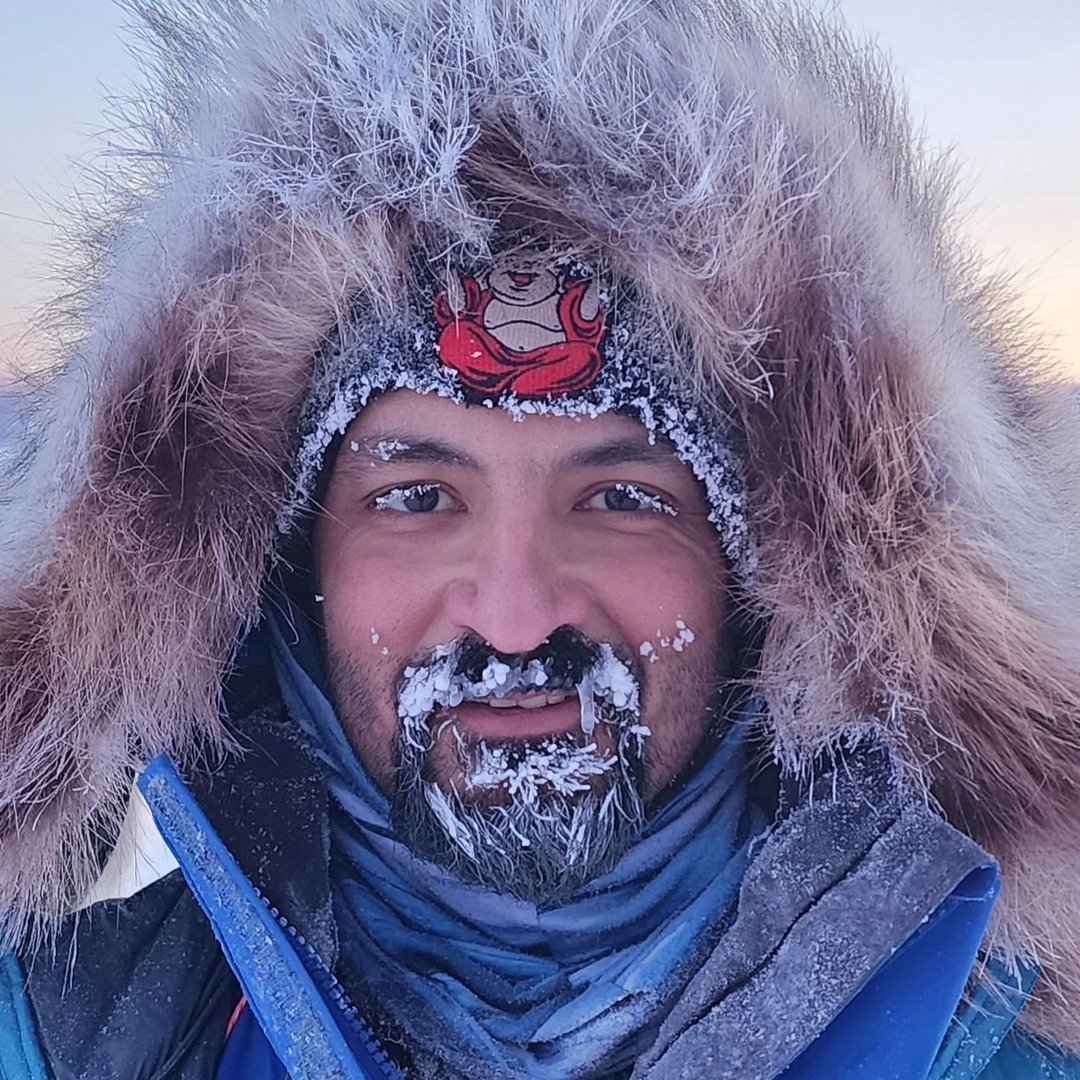
Artic Explorer /
Akshay Nanavati is a Marine combat veteran, author, ultra-endurance athlete, and keynote speaker who has built an entire philosophy around one idea: fear is not the enemy, it is the fuel. He survived drug addiction, walked in front of military convoys in Iraq searching for IEDs, and came home to battle PTSD, depression, and alcoholism that pushed him to the edge of suicide. Instead of stopping there, he spent years deep in neuroscience, psychology, and spirituality to figure out what it actually takes to heal and thrive. That work became his book, Fearvana, which carries a foreword from the Dalai Lama. Since then he has run 167 miles across post-war Liberia, a solo expedition across Antarctica, done humanitarian work with former child soldiers and survivors of sex trafficking. He has been featured on CNN, Forbes, and Bloomberg. If you want a guest who has genuinely tested the limits of what a human being can endure, Akshay is that person.



